Emma Reed
March 31, 2026

Weekend Sleep-In Headaches: A Practical Plan for Social Jet Lag, Caffeine Timing, and Monday Recovery
A lot of people have the same confusing experience: they sleep longer on the weekend, assume they are “catching up,” and still wake up with a headache on Sunday or Monday. It feels unfair. You did the healthy thing and got more sleep, so why does your head feel worse?
Usually, the issue is not extra sleep by itself. The issue is timing drift. If your sleep schedule shifts hard on weekends and then snaps back for workdays, your nervous system and circadian rhythm can get out of sync. Add changes in caffeine timing, hydration, meals, screen exposure, and stress, and you get a perfect setup for headache risk.
This guide explains a practical, medically safe approach to reducing weekend-to-weekday headaches. No cure claims, no miracle routine, and no diagnostic promises. Just realistic habits that lower the odds of getting hit by preventable Monday pain.
Why “more sleep” can still lead to headaches
Sleep quantity matters, but timing consistency also matters. Your brain likes predictability. When you shift bedtime and wake time by multiple hours across the week, you create a mini timezone shift without boarding a flight. This is often called social jet lag.
A typical pattern looks like this:
- Weekdays: sleep from 12:00 AM to 6:30 AM
- Friday/Saturday: sleep from 2:00 AM to 10:00 AM
- Sunday night: can’t fall asleep early
- Monday morning: wake early anyway, tired and headachy
That pattern can stack multiple headache contributors:
- Circadian misalignment from large schedule shifts
- Caffeine timing changes (late coffee on weekends, early caffeine on Monday)
- Meal timing drift and blood sugar variability
- Dehydration after late nights or alcohol
- Muscle tension from stress about the week ahead
You do not need every factor for a headache. Two or three together can be enough.
Common triggers in the weekend-to-work transition
1) Sleep timing swing, not just sleep length
If you wake much later on weekends, your internal clock shifts later. Then Monday requires an abrupt shift earlier. That mismatch can worsen sleep quality and pain sensitivity.
2) Caffeine inconsistency
Many people drink caffeine later on weekends and earlier on workdays. The total amount may be similar, but timing volatility can still increase headache risk in sensitive people.
3) Irregular meals
Skipping breakfast, delaying lunch, or eating much later than usual can create energy crashes and headache vulnerability.
4) Hydration gaps
Long sleep windows, social plans, and travel can quietly reduce fluid intake. Mild dehydration can amplify discomfort and fatigue.
5) Stress ramp-up on Sunday
Anticipatory stress about Monday can increase jaw clenching, neck tension, and poor sleep onset.
The minimum effective prevention strategy
If you want a short version, focus on these four anchors:
- Keep weekend wake time within about 60 to 90 minutes of weekdays.
- Keep caffeine timing stable (especially first and last caffeinated drinks).
- Keep meal timing predictable.
- Do a brief Sunday evening decompression instead of doom-scrolling into midnight.
This will not erase all headaches, but it often lowers frequency and intensity.
A practical Friday-to-Monday protocol
Friday: protect Saturday morning
- Pick a latest wake target before bed.
- Hydrate before sleep.
- If you go out, set a recovery plan (water + breakfast timing).
Saturday: enjoy flexibility, avoid extreme drift
- Wake within 60 to 90 minutes of weekday time.
- Get morning light exposure for 10 to 20 minutes.
- Keep first caffeine timing close to normal.
- Move your body at least briefly.
Sunday: reduce Monday shock
- Avoid a very late sleep-in.
- Keep caffeine earlier in the day.
- Eat regular meals and hydrate steadily.
- Start a wind-down routine 60 to 90 minutes before bed.
Monday: early damage control if needed
At first warning signs (pressure, neck tightness, light sensitivity):
- Hydrate and eat a steady meal/snack.
- Reduce screen glare and increase text size.
- Do a short movement break and jaw/shoulder reset.
- Avoid chasing pain with extra late caffeine.
Early action is usually better than pushing through for hours.
Build your “anti-Monday-headache” environment
Your environment can either protect you or quietly increase risk.
- Keep water visible near your desk and bed.
- Prepare an easy breakfast option on Sunday night.
- Use automatic reminders for breaks every 30 to 45 minutes.
- Adjust monitor brightness and reduce glare.
- Keep a fallback snack available during busy mornings.
The goal is friction reduction: fewer decisions when you are already stressed.
What to track for 3 weeks (without overcomplicating it)
Use your headache tracker with a compact daily template:
- Sleep start/end times
- Wake time difference from usual
- Headache presence and severity (0-10)
- Caffeine timing + amount
- Meal timing
- Hydration estimate
- Stress level
- Screen hours + break adherence
- Associated symptoms (nausea, light sensitivity, etc.)
After 2 to 3 weeks, ask:
- Are headaches more common when wake time drift is >2 hours?
- Is Sunday late caffeine linked to Monday symptoms?
- Do headaches drop when breakfast timing is consistent?
- Does hydration on Sunday evening help Monday mornings?
You are not proving causation perfectly. You are finding useful, repeatable patterns.
Caffeine strategy that avoids rebound chaos
Caffeine is not the villain for everyone. In many people it helps function. The risk is inconsistency.
A safer pattern:
- Keep a similar first dose window daily.
- Avoid large dose spikes after poor sleep.
- Keep late-day caffeine limited if sleep onset suffers.
- If reducing caffeine, taper gradually rather than abrupt stop.
Abrupt change can itself trigger headaches in some people.
Sleep strategy: consistency beats weekend extremes
If you are sleep-deprived, recovery sleep helps. But huge schedule swings can backfire. Try a middle path:
- Add modest extra sleep time, not a 3- to 4-hour shift.
- Use short naps earlier in the day if needed.
- Maintain morning light exposure on weekends.
- Keep your pre-sleep routine similar all week.
Think “stable enough” rather than “perfect.”
Nutrition and hydration guardrails
Two simple rules prevent many avoidable crashes:
- Do not run long morning fasts after poor sleep.
- Rehydrate early, not just after symptoms begin.
A basic Monday template:
- Water soon after waking
- Protein + carbohydrate breakfast within a predictable window
- Mid-morning hydration check
- Lunch before energy collapse
Simple, boring, effective.
Neck, jaw, and screen load: the hidden multipliers
Weekend travel, gaming, binge-watching, and phone posture can increase neck and jaw tension before Monday even starts.
Use a 3-minute reset, 2-3 times/day:
- Slow shoulder rolls
- Gentle neck range of motion
- Jaw unclench cue (tongue on palate, teeth apart)
- Look at distant objects for 20-30 seconds
This does not “fix” everything, but it reduces load accumulation.
If you wake up with a headache anyway: a calm step-by-step plan
Sometimes you do everything “right” and still wake up in pain. That does not mean your plan failed. It means you are dealing with a condition that is probabilistic, not perfectly controllable. Handle the morning like a checklist instead of an argument with yourself.
- Assess quickly: rate pain and check for warning symptoms.
- Hydrate early: small, steady intake is usually easier than chugging.
- Fuel predictably: choose a simple meal with protein + carbohydrate.
- Lower visual load: reduce brightness and increase text size.
- Move gently: brief walking or mobility can reduce stiffness.
- Record context: sleep timing, caffeine, stress, and any unusual factors.
If symptoms are severe, unusual for you, or include red flags, stop self-management and seek medical care.
This response plan matters because panic often creates extra muscle tension and stress chemistry, which can worsen perceived pain. Calm, early, and structured tends to work better than waiting for a crisis point.
Travel, shift work, and family schedules: adapt without giving up consistency
Not everyone can keep a textbook sleep schedule. Parents, shift workers, and frequent travelers often need flexible routines. The target is not perfection; it is minimizing abrupt swings.
Try this adaptation rule: keep at least one anchor stable even when life is chaotic.
- If bedtime must vary, keep wake time closer to normal.
- If wake time must vary, keep caffeine timing stable.
- If meals are irregular, protect hydration and movement breaks.
One stable anchor is better than none. Over weeks, that still reduces headache volatility.
A 14-day reset experiment
If you want one concrete plan, run this for two weeks:
- Weekend wake time no more than 90 minutes later than weekdays.
- Same caffeine start window daily.
- Sunday caffeine cutoff set in advance.
- Predictable breakfast and lunch timing.
- Hydration check morning + midday + evening.
- Brief Sunday wind-down routine.
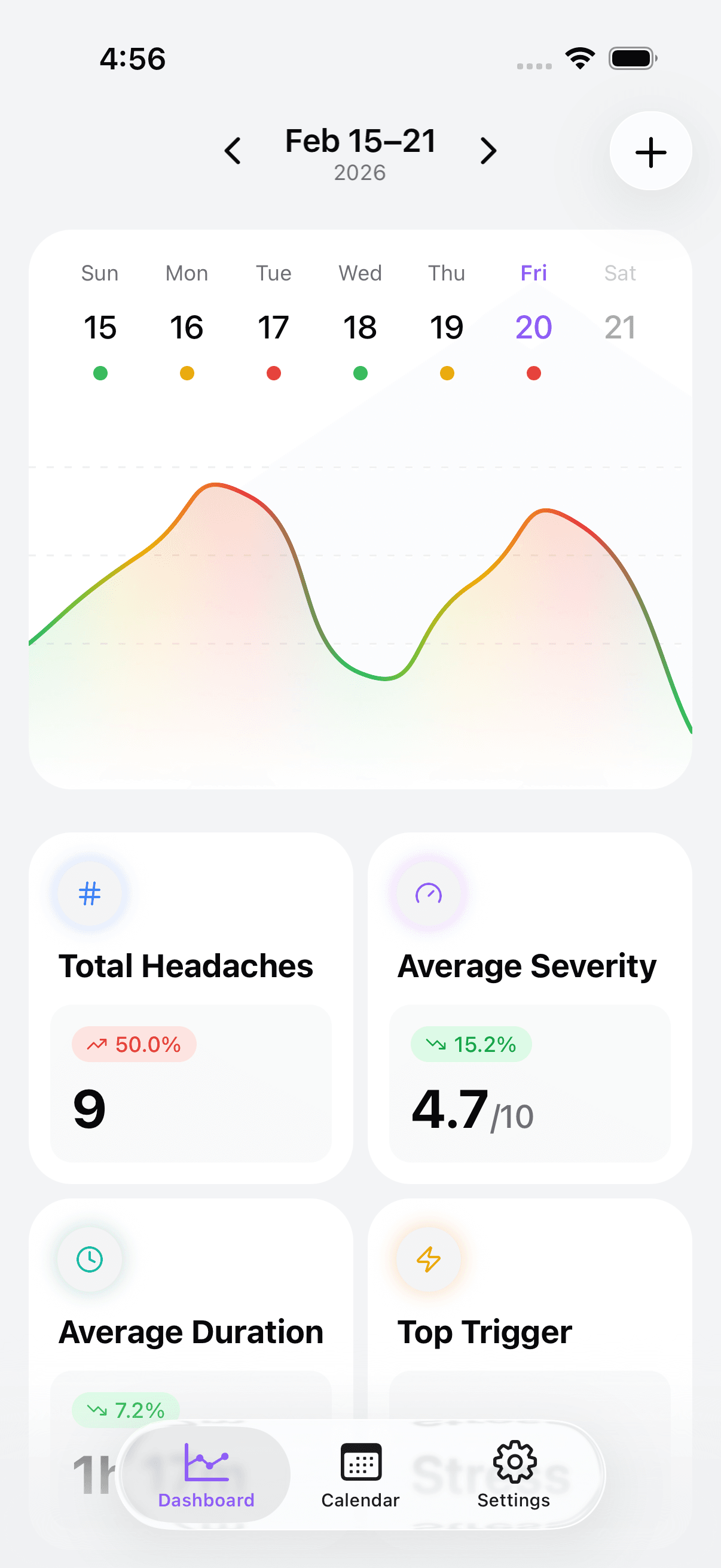
- Daily tracking in your app.
At day 14, review frequency, severity, and recovery time. Keep the elements that helped most.
When to seek medical care
This guide is for day-to-day prevention, not diagnosis. Seek urgent medical care for sudden severe “worst headache,” new neurological symptoms (weakness, confusion, trouble speaking, major vision change), headache after significant head injury, fever with stiff neck, or a major new headache pattern. If headaches are frequent, disabling, or escalating, discuss them with a clinician.
Final takeaway
Weekend headaches and Monday headaches are often less random than they feel. They commonly reflect timing drift, routine volatility, and delayed recovery. The upside: those are adjustable variables.
No cure claims. No perfection required. Just steadier timing, earlier intervention, and better data so your week starts with less pain and more control.
Take control of your headaches. Start tracking today.