Emma Reed
March 25, 2026

Midweek Headaches and Mental Overload: A Practical Reset Plan You Can Actually Stick To
By Wednesday, a lot of people feel like their brain is running on low battery. Meetings piled up, sleep got uneven, meals turned random, and stress kept simmering in the background. Then the headache shows up. Sometimes it is a dull pressure behind the eyes. Sometimes it is neck tension that crawls upward. Sometimes it is a migraine day that shuts down everything.
If this sounds familiar, you are not broken and you are not weak. Midweek headaches are common because multiple triggers often stack together at the same time: disrupted sleep, dehydration, inconsistent caffeine, screen strain, skipped breaks, and stress hormones that never really come down. One trigger might be manageable. Five triggers at once can push you over your personal threshold.
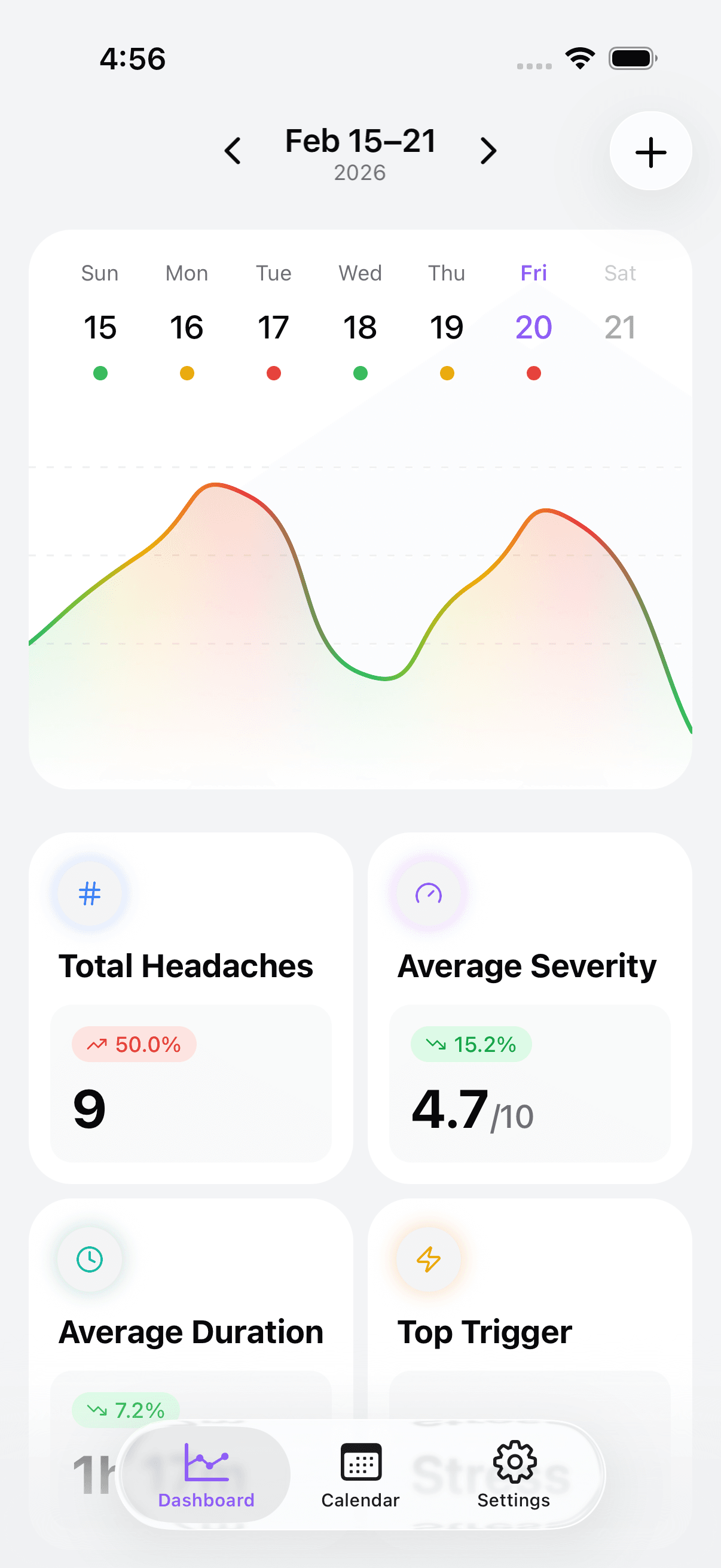
The goal of this guide is simple: help you reduce headache load through a realistic reset plan for busy weeks. This is not about perfection, and it is not a cure. It is a practical framework you can adjust to your life and track inside Headache Tracker.
Why Wednesday Hits Hard
Headaches often feel random, but patterns usually exist when you collect enough days of data. Midweek tends to be rough for a few reasons:
- Sleep debt accumulates. Losing even 30–60 minutes of sleep across a few nights can increase headache vulnerability.
- Stress compounds. Deadlines, social obligations, and unresolved tasks keep your nervous system activated.
- Hydration slips. Busy mornings and back-to-back calls make it easy to forget water.
- Caffeine timing drifts. Too much, too late, or a sudden reduction can all contribute.
- Screen exposure peaks. Long visual focus with poor posture can trigger eye strain and neck tension.
- Meals become irregular. Long gaps without food can trigger headaches for some people.
Think of headache risk like a “load meter.” Each trigger adds weight. Your symptoms often appear when your load crosses your personal limit.
The Core Idea: Reduce Load, Not Just Pain
When pain starts, most people try one thing quickly and hope it disappears. That can help, but long-term progress usually comes from reducing trigger load throughout the day.
A better question is: “What can I lower right now?”
- Can I lower light intensity?
- Can I lower neck tension?
- Can I lower stress arousal with two minutes of slow breathing?
- Can I lower dehydration risk with one glass of water?
- Can I lower schedule pressure by moving one non-urgent task?
Small reductions may seem minor, but combined, they can prevent escalation.
Your 24-Hour Midweek Reset Plan
Use this as a template whenever you notice headache vulnerability rising.
1) Morning Stabilizer (10–20 minutes)
Start with consistency, not intensity.
- Drink water soon after waking.
- Eat a simple breakfast with protein + carbs.
- Keep caffeine amount close to your usual baseline.
- Spend 3–5 minutes on neck and shoulder mobility.
- Get brief daylight exposure if possible.
Why this helps: you are reducing several common triggers before your workload accelerates.
2) Workday Protection Blocks
Set two or three “protection blocks” in your calendar. These are short checkpoints, not long breaks.
At each block:
- Drink water.
- Relax jaw, shoulders, and forehead.
- Look away from screens for at least 20–30 seconds.
- Take 6 slow breaths (longer exhale than inhale).
- Quick symptom check: pain level, light sensitivity, nausea, focus.
Even 2–4 minutes can interrupt the stress-and-strain spiral.
3) Caffeine Guardrails
Caffeine is useful for many people, but inconsistency is a common problem.
- Keep your daily amount relatively stable.
- Avoid large spikes compared with your normal intake.
- Avoid very late caffeine if sleep is sensitive.
- If reducing caffeine, taper gradually rather than stopping abruptly.
Use your tracker notes to log time + amount. Patterns become clear faster than memory alone.
4) Meal and Blood Sugar Rhythm
For people who are sensitive to long fasting windows, skipped meals can increase headache risk.
- Plan meal windows before the day gets chaotic.
- Keep a backup snack available.
- Pair carbs with protein or fat for steadier energy.
No need for perfect nutrition plans. Reliability beats complexity.
5) Evening Downshift
The evening determines tomorrow more than people expect.
- Dim bright light 1–2 hours before bed when possible.
- Reduce high-stimulation scrolling near bedtime.
- Keep bedtime and wake time reasonably consistent.
- If your mind is racing, do a 5-minute “brain dump” on paper.
Sleep regularity is one of the strongest long-game levers for headache prevention.
Fast Triage for a Headache That Already Started
When symptoms begin, use a structured response instead of panic mode.
Step A: Identify your stage
- Early: mild pressure, slight tension, still functional.
- Middle: clear pain, concentration dropping, sensitivity increasing.
- Late: severe pain, nausea/light or sound sensitivity, low function.
Step B: Match response to stage
Early stage actions
- Hydrate.
- Lower screen brightness and visual load.
- Do 2–5 minutes of breathing and muscle release.
- Take a short movement break.
- Consider your clinician-advised early medication plan if you use one.
Middle stage actions
- Reduce incoming tasks quickly.
- Move to a quieter, darker environment if possible.
- Use your recommended acute-care steps.
- Limit decision fatigue (simple checklist only).
Late stage actions
- Prioritize safety and rest.
- Follow your clinician’s guidance.
- Delay nonessential responsibilities.
- Track details after stabilization, not during peak distress.
A staged plan reduces hesitation and helps you act sooner.
What to Track in Headache Tracker (High Value, Low Effort)
You do not need to log everything. Focus on variables with high signal.
Daily minimum fields
- Headache presence (yes/no)
- Peak intensity (0–10)
- Start time and duration
- Sleep duration + sleep quality score
- Caffeine (time and approximate amount)
- Hydration status (simple scale)
- Stress level (0–10)
- Menstrual/hormonal context if relevant
- Medication used (if any)
Optional but powerful fields
- Screen time spikes
- Meal gaps
- Weather sensitivity notes
- Neck or jaw tension level
- Exercise timing and intensity
After 2–4 weeks, review trends weekly rather than judging single days.
Weekly Pattern Review: 15-Minute Method
Once per week, run this quick review:
- Which two triggers appeared most often before headache days?
- Which protective action was easiest to maintain?
- Which day/time had the highest vulnerability?
- Did early intervention reduce severity or duration?
- What one adjustment should you test next week?
Pick one change at a time. Multiple simultaneous experiments make it hard to learn what worked.
Common Midweek Mistakes (and Better Alternatives)
Mistake 1: “I’ll push through until tonight.”
Pain often escalates when early signals are ignored.
Better: Take a 3-minute protection block at first warning signs.
Mistake 2: Big caffeine swings
Large day-to-day changes can create instability.
Better: Keep intake steady and predictable.
Mistake 3: Skipping hydration until afternoon
Mild dehydration can amplify symptoms.
Better: Front-load water earlier in the day.
Mistake 4: Treating sleep as optional during busy weeks
Short sleep plus stress is a frequent headache combo.
Better: Protect sleep timing even when total sleep is imperfect.
Mistake 5: Tracking inconsistently
Without data, every week feels like guesswork.
Better: Log the minimum fields daily in under two minutes.
Building a “Low-Friction” Environment
Good systems beat good intentions. Prepare your environment so headache-friendly choices are easier.
- Keep a water bottle in your primary workspace.
- Pre-plan one backup meal or snack.
- Add calendar reminders for protection blocks.
- Save your triage checklist in notes for fast access.
- Use app reminders at times your risk is usually highest.
When your day gets chaotic, defaults matter.
When to Seek Medical Care Promptly
This guide is educational and not a substitute for medical diagnosis. Seek urgent care immediately for warning signs such as:
- Sudden severe “worst headache of your life” onset
- New neurologic symptoms (weakness, confusion, speech difficulty, vision loss)
- Headache after significant head injury
- Fever with stiff neck, rash, or severe illness symptoms
- New headache pattern that is rapidly worsening
Also talk with a qualified clinician if headaches are frequent, disabling, or changing in pattern, or if your current management plan is not working.
A Sustainable Mindset for Busy People
You do not need a perfect routine. You need a repeatable one.
A practical target:
- 70% consistency on sleep timing
- 70% consistency on hydration check-ins
- 70% consistency on tracking minimum fields
That level of consistency is often enough to reveal strong patterns and reduce preventable flare-ups over time.
Think of headache management like financial budgeting: small daily decisions compound. You may not see a dramatic change in 48 hours, but you can see meaningful trend improvements over weeks.
Example “Wednesday Rescue” Schedule
Use or adapt this sample.
- 07:00 Wake, water, breakfast, usual caffeine
- 09:30 Protection block #1 (breathing + posture + water)
- 12:30 Lunch before major hunger drop
- 15:00 Protection block #2 + brief walk
- 17:30 Quick symptom log + tomorrow prep
- 21:30 Light downshift, reduced screen intensity
- 22:30 Bed routine
Nothing fancy. Just enough structure to reduce overload.
Final Takeaway
Midweek headaches are rarely caused by one dramatic trigger. More often, they come from accumulated load. The good news is that accumulated load can also be reduced.
Start with a simple reset plan: stabilize mornings, protect two or three moments during the workday, keep caffeine and meals consistent, downshift in the evening, and log a few key data points daily. Then review weekly and adjust one lever at a time.
No miracle fixes. No perfection required. Just a smarter system that makes hard weeks less punishing.
If you use Headache Tracker consistently, your data can help you move from “Why is this happening again?” to “I know my pattern, and I know what to do next.”
Take control of your headaches. Start tracking today.