Emma Reed
March 26, 2026

Pressure-Change Headaches: A Practical Plan for Days When the Weather Is All Over the Place
Some people can predict a weather shift better than the forecast app. Their signal is not a radar image — it is a dull pressure behind one eye, a tight band around the forehead, or a foggy, heavy feeling that starts a few hours before rain.
If that sounds familiar, you are not imagining it, and you are not weak. Many people who live with migraine or recurrent headaches report that changing weather is one of their most reliable triggers. The challenge is that you cannot stop a front from moving in. You can only adjust what you control.
This guide gives you a practical, non-dramatic plan for weather-sensitive headache days. No miracle promises, no "just drink water" nonsense, and no cure claims. The goal is simple: reduce avoidable load on your nervous system, keep symptoms from escalating when possible, and recover faster when a headache still happens.
Why weather shifts can feel so disruptive
Researchers are still mapping the exact mechanisms, but several patterns are likely involved:
- Barometric pressure changes may affect pain-sensitive structures in and around the head for some people.
- Humidity and temperature swings can add physical stress, dehydration risk, and sleep disruption.
- Light changes (gray skies, glare after rain, sudden bright sun) can trigger visual sensitivity.
- Routine disruption on stormy or rapidly changing days can throw off hydration, meals, movement, and stress levels.
The key point: weather is often a multiplier, not the only cause. If your baseline is already overloaded (poor sleep, missed meals, too much screen time, high stress), a pressure drop can be the final push.
That is good news in a weird way. You cannot control the atmosphere, but you can lower the rest of the load.
Start with a 2-week pattern check
Before changing everything, gather signal.
For 14 days, track:
- Headache start time and intensity (0–10)
- Sleep duration and quality
- Hydration estimate
- Caffeine timing and amount
- Meals skipped or delayed
- Stress level spikes
- Major weather change windows (rain/storm alerts, pressure trend if your app shows it)
You are looking for trends, not perfection. Example patterns:
- "Headaches hit 6–10 hours before rain"
- "Morning headaches worse after short sleep + late caffeine"
- "Weather-triggered headaches escalate when I skip lunch"
This pattern check helps you build a targeted plan instead of guessing daily.
Build your "weather shift protocol"
Think of this like a low-friction checklist you run when forecast conditions suggest risk.
1) Protect sleep timing first
Sleep inconsistency makes many trigger thresholds lower.
On weather-unstable weeks:
- Keep wake time consistent within about 30–60 minutes.
- Avoid shifting bedtime too late because "I’ll catch up tomorrow."
- Reduce bright-screen exposure in the last 60–90 minutes before bed.
- If sleep was poor, lower next-day load (more on that below) instead of forcing a maximal schedule.
You do not need perfect sleep. You need predictable sleep.
2) Front-load hydration (without overdoing it)
Dehydration is a common headache amplifier.
Practical approach:
- Start hydration early in the day, not only when pain starts.
- Pair water intake with meals/snacks.
- If you sweat heavily or it is hot/humid, include electrolyte-containing fluids as needed.
Avoid extremes. Chugging huge volumes all at once can feel awful and is not necessary.
3) Stabilize meal timing
Long gaps between meals can make weather-triggered days worse.
Aim for:
- Regular meal timing
- A protein + fiber anchor in breakfast and lunch
- A small planned snack if your afternoon tends to crash
The point is metabolic stability, not diet perfection.
4) Keep caffeine boring and consistent
Big caffeine swings can create their own headache cycle.
If you use caffeine:
- Keep dose and timing predictable day to day
- Avoid sudden overuse on bad days
- Avoid late-day caffeine that harms night sleep
Consistency beats heroic fixes.
5) Reduce sensory load preemptively
When weather is shifting, your brain may tolerate less noise, light, and screen strain.
Try:
- Lower display brightness and increase text size
- Use short visual breaks (even 60–90 seconds helps)
- Reduce unnecessary notification noise
- Wear sunglasses outdoors if glare is intense
You are not being fragile. You are managing input load.
The "yellow flag" day plan (early symptoms)
A yellow flag day means: you feel off, pressure is changing, but pain is not fully established yet.
Use this sequence early:
- Drink a moderate amount of fluid.
- Eat a balanced snack/meal if overdue.
- Take a short movement break (5–15 minutes light walk or mobility).
- Reduce screen strain for one focused block.
- If your clinician has advised an early-use medication strategy, follow that plan.
People often wait too long because they hope symptoms disappear. Early action is usually more effective than late panic mode.
The "red flag" day plan (headache active)
If pain is already established, shift from prevention to damage control.
- Move to a calmer environment if possible.
- Use hydration and a gentle meal if tolerated.
- Keep inputs low: dimmer light, less noise, fewer context switches.
- Use your prescribed or clinician-recommended treatment as directed.
- Delay non-urgent cognitive heavy lifting if you can.
What not to do:
- Stack random remedies out of frustration
- Overuse pain medication beyond recommended limits
- Push through intense pain for hours assuming willpower solves biology
A red day is about minimizing escalation and shortening recovery, not winning productivity awards.
Medication-overuse risk: the quiet trap
When weather-related headaches cluster, it is easy to increase acute medication frequency. That can backfire over time.
General safety principle: if you are needing acute headache medication frequently, discuss this with a healthcare professional. You may need a better preventive strategy or a structured plan to avoid rebound patterns.
No guilt here — just risk management.
Work and schedule strategy for unstable-weather weeks
You do not need to cancel life. You need better load distribution.
Try a three-tier schedule:
- Green tasks (low strain): admin, routine replies, simple errands
- Yellow tasks (moderate strain): planned meetings, focused work blocks
- Red tasks (high strain): deep creative work, difficult decisions, long uninterrupted analysis
On high-risk weather days, front-load green/yellow tasks and protect recovery windows. Save red tasks for better baseline days when possible.
This is not laziness. It is tactical pacing.
Movement: gentle consistency beats all-or-nothing
Some people stop moving completely during headache-prone weeks, then feel stiffer and worse.
Better pattern:
- Keep light daily movement (walks, mobility, gentle cycling)
- Avoid sudden maximal-intensity sessions if warning symptoms are present
- Use movement as nervous-system regulation, not punishment
If a workout repeatedly precedes headache flares on weather-shift days, lower intensity and review timing, hydration, and fueling.
Environment tweaks that actually help
Small changes can lower trigger load:
- Keep indoor temperature stable where possible
- Use a humidifier or dehumidifier if indoor humidity swings are extreme
- Minimize strong scents on sensitive days
- Keep a "headache kit" ready: water bottle, light snack, eye mask, any clinician-approved medication, and a short plan card
The goal is less decision fatigue when symptoms start.
Build a 24-hour recovery loop
After a headache day, do not pretend nothing happened. Run a quick reset:
- Rehydrate gradually
- Eat a steady evening meal
- Lower stimulation before bed
- Keep next morning routine simple and predictable
- Review what likely amplified the episode
Recovery is part of prevention. The day after matters.
When to seek medical care urgently
Most recurrent headaches are not emergencies, but some symptoms need immediate evaluation.
Seek urgent care right away for signs such as:
- Sudden, severe "worst headache of your life"
- New neurological symptoms (weakness, confusion, trouble speaking, vision loss)
- Headache with fever, stiff neck, fainting, seizure, or head injury
- A clear major change in your usual headache pattern
For ongoing recurrent headaches, especially if frequency is increasing or daily function is dropping, schedule a non-urgent medical review. A tailored diagnosis and treatment plan beats internet guesswork.
A realistic weekly template
Use this simple framework during weather-volatile periods:
Daily baseline
- Consistent wake time
- Regular hydration rhythm
- Predictable meal timing
- Stable caffeine limits
- Light movement
- Brief evening wind-down
High-risk forecast day
- Start protocol early (hydration, meal timing, reduced sensory load)
- Shorter, more frequent breaks
- Use early-treatment plan if advised by your clinician
- Reduce optional stressors
Post-headache day
- Recovery loop (hydrate, refuel, sleep protection)
- Quick pattern note in tracker
- Adjust next day load
If you miss a step, fine. Restart at the next block. Consistency over heroics.
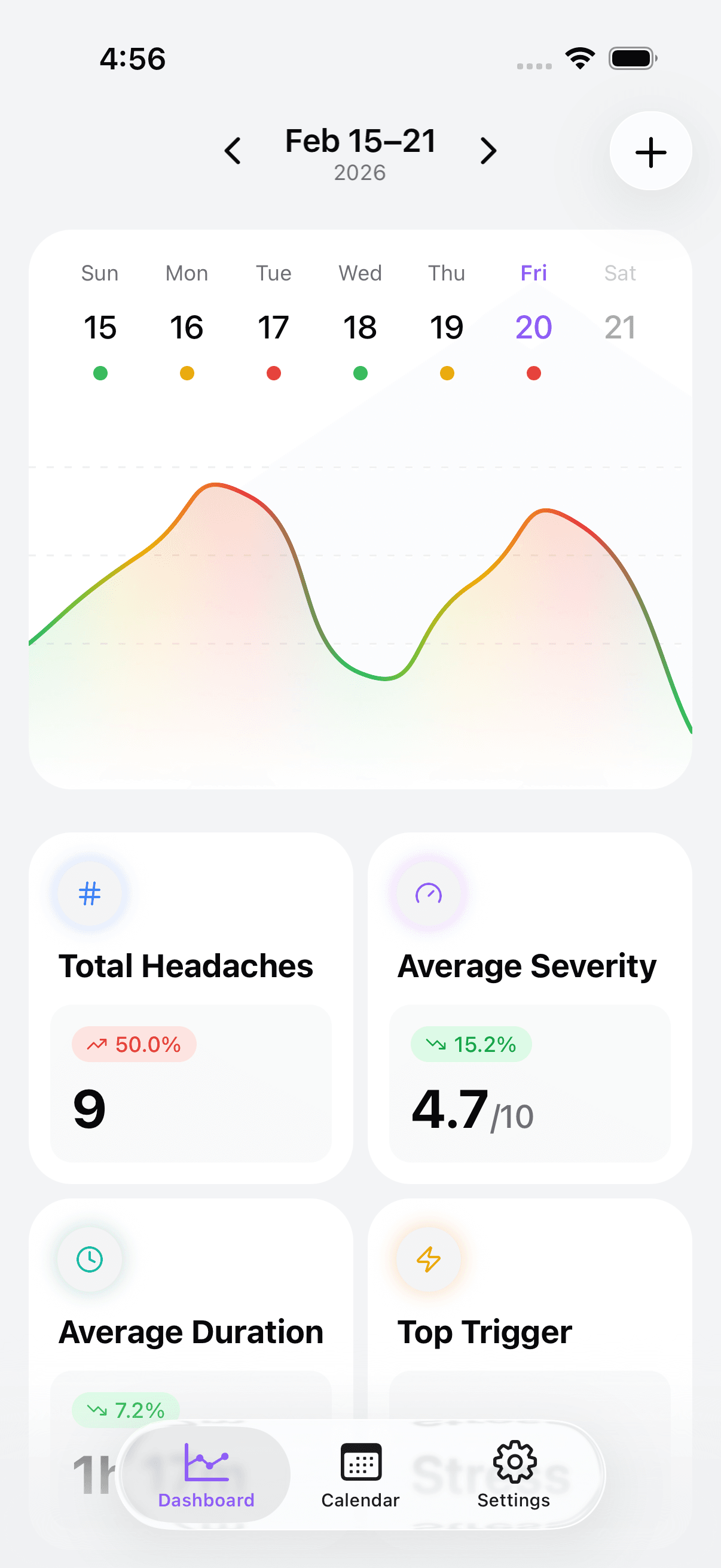
How Headache Tracker can make this easier
A tracker is useful only if it helps decisions. Keep entries short and actionable.
Focus on fields that influence your next move:
- Symptom timing and intensity
- Sleep quality
- Hydration and meal timing
- Caffeine timing
- Weather context
- What intervention you used and when
- Outcome after 2–4 hours
After a few weeks, review patterns and build a personal protocol that matches your real life, not a generic template.
Final word: aim for fewer bad days, not perfect control
Weather-sensitive headaches can feel unfair because the trigger is literally in the sky. But even then, you are not powerless.
You can build stable routines, catch warning signs earlier, reduce trigger stacking, and recover with less chaos. Some days will still hurt. That does not mean your plan failed. It means your plan helped contain the damage.
No cure promises. Just practical control where control actually exists — which, on hard weeks, is more than enough to matter.
Take control of your headaches. Start tracking today.