Emma Reed
March 2, 2026

Weather and Headaches: A Practical Tracking Plan to Find Your Personal Pressure, Humidity, and Heat Patterns
If your headache seems to flare when the weather shifts, you are not imagining it. Many people report changes in pain frequency or intensity around pressure drops, heat waves, humid days, or sudden temperature swings. The hard part is this: weather is always changing, and your body is influenced by many things at once—sleep, stress, hydration, meals, hormones, activity, and medication timing.
So the goal is not to blame every bad day on rain clouds. The goal is to identify your repeatable pattern with enough confidence that you can plan better and reduce surprise headache days.
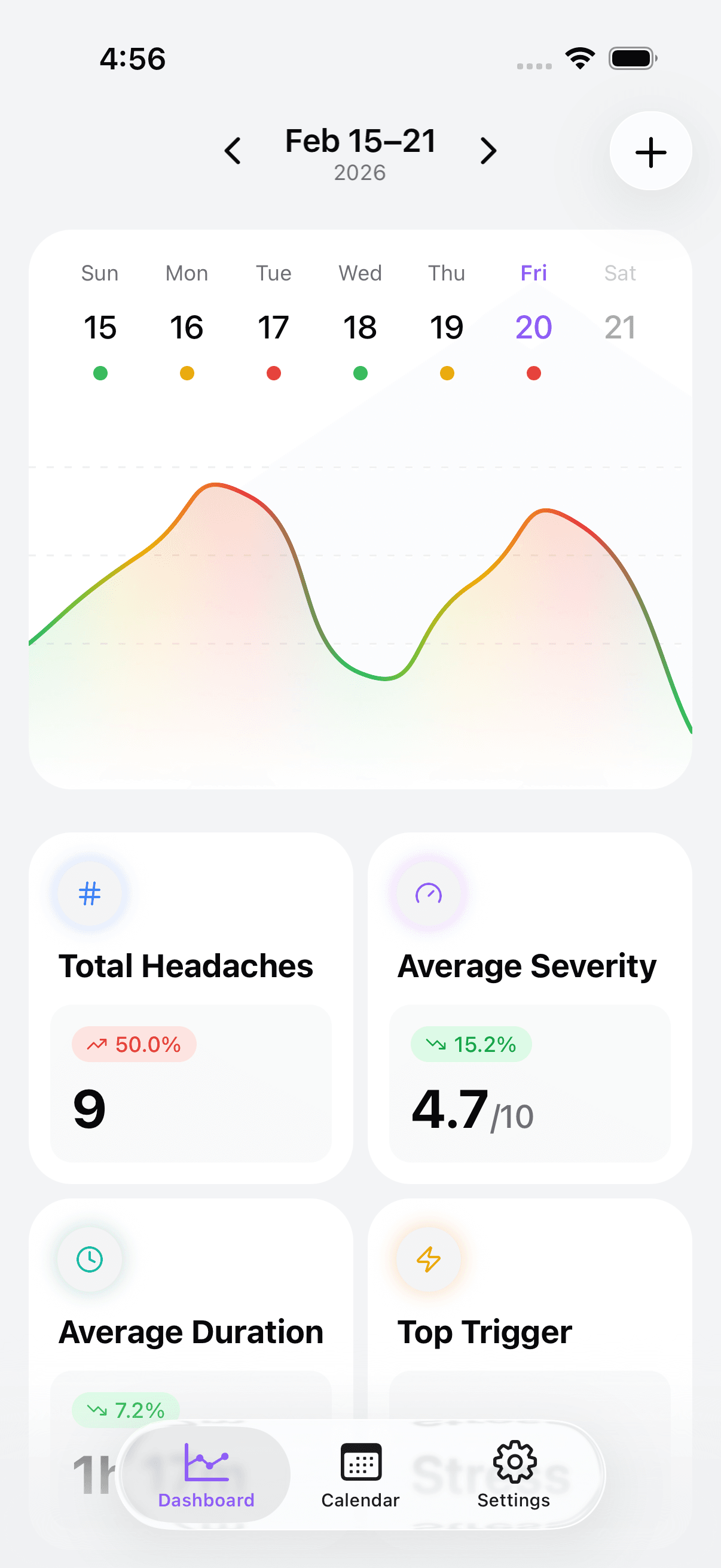
This guide gives you a realistic, low-burden workflow using Headache Tracker: what to log, how to review, what counts as a real signal, and how to act without overreacting.
Medical safety note: This article is informational, not diagnostic, and not a substitute for professional care. If headaches are new, severe, rapidly worsening, or include unusual neurological symptoms, seek medical attention promptly.
Why weather feels like a mystery
Most people remember dramatic episodes: the day pain was an 8/10 during a storm front, or the migraine that started on a very hot afternoon. What we forget are the neutral days when weather changed but nothing happened. That memory gap creates false certainty.
Common bias traps:
- Severity bias: high-pain days dominate memory.
- Recency bias: last week feels more important than last month.
- Confirmation bias: once you suspect pressure drops, you notice only the examples that fit.
A good tracker protects you from those traps by logging both symptom days and non-symptom days.
What weather variables are worth tracking first
You do not need a meteorology dashboard. Start with a concise set:
- Barometric pressure trend (rising, stable, falling)
- Temperature range (especially sudden jumps)
- Humidity level (low, medium, high)
- Heat index / “feels like” if available
- Storm proximity (none / nearby / active)
In parallel, keep your personal context data:
- Sleep duration + quality
- Stress level
- Hydration status
- Meal timing
- Caffeine pattern
- Medication use and response
Without context data, weather-only tracking often overestimates weather effects.
Minimal daily entry that still produces insights
On routine days, keep logging under 90 seconds:
- Pain score (0–10)
- Start/end or time window
- Main symptoms (light sensitivity, nausea, aura, neck pain, etc.)
- Pressure trend (if known)
- Temperature/humidity snapshot (simple category is enough)
- Sleep quality
- Stress level
- Hydration quality
- Medication taken? (name, time, effect)
If that feels heavy, make a “core mode” entry:
- Pain score
- Time window
- One weather note
- One lifestyle note (sleep or hydration)
Consistency beats detail.
The 21-day weather-headache protocol
Fourteen days can work, but weather patterns often need a little more time. A 21-day run gives better signal quality.
Days 1–5: Build rhythm, no interpretation
Log daily. Avoid drawing conclusions yet.
Days 6–10: Improve context quality
Be stricter with sleep/hydration/meal timing logs.
Days 11–15: First signal review
Look for repeated sequences:
- Falling pressure followed by pain within 6–24 hours
- High humidity + poor sleep before moderate/severe days
- Heat spikes on low-hydration days causing afternoon headaches
Days 16–21: Test one mitigation plan
Choose one practical intervention and apply consistently on forecast-risk days.
Example interventions:
- Start hydration earlier in the day
- Protect lunch timing even on busy days
- Reduce additional stress load on high-risk weather days
- Keep bedtime/wake time tighter when fronts are forecast
Then compare outcomes to earlier weeks.
What counts as a “real pattern” vs coincidence
A single bad day during a storm proves nothing. A useful pattern usually has:
- Similar weather exposure
- Similar symptom timing/severity
- Repetition across multiple events
A practical confidence rule:
- Weak signal: 1 event
- Moderate signal: 2 similar events with clean context
- Useful signal: 3+ repeated events where timing makes sense
Also check “false alarms”: days with similar weather but no headache. If false alarms are very common, weather may be only a minor contributor.
Example pattern interpretations
Pattern A: Pressure drop sensitivity
Observed pattern:
- Pressure falls significantly overnight
- Headache starts next morning, usually 5–7/10
- More likely when sleep is short
Action plan:
- Prioritize sleep quality on forecast front-change days
- Increase early hydration
- Keep caffeine steady (avoid extremes)
- Prepare low-stimulation work blocks in morning
Pattern B: Heat + dehydration interaction
Observed pattern:
- Warm/hot days alone are tolerated
- Hot days + low morning hydration = midday pain spike
Action plan:
- Front-load water intake before noon
- Use cooling breaks and shade
- Avoid delaying lunch
- Plan physically demanding tasks for cooler windows
Pattern C: Humidity + stress stacking
Observed pattern:
- Humid days by themselves are mixed
- Humid days + high stress = higher chance of headache
Action plan:
- Add short stress-reset block (breathing, walk, quiet break)
- Reduce optional cognitive load when humidity is high
- Keep evening wind-down consistent
Notice what these have in common: they are management plans, not cure claims.
Weekly review template (10 minutes)
Do this once a week, same day/time if possible.
- Count headache days (mild / moderate / severe)
- Tag weather context for each pain day (pressure, heat, humidity)
- Identify repeated weather + lifestyle combinations
- Review medication timing and response quality
- Choose one adjustment for next week
Keep changes small. If you change five things at once, you won’t know what helped.
Monthly review template (20 minutes)
At month-end, summarize:
- Total headache days
- Severe day count
- Most common weather-linked pattern candidates
- Most effective mitigation actions
- Days with high impact on function
Bring this summary to healthcare appointments if needed. Structured data usually leads to better, faster conversations.
Medication and safety logging (important context)
When medication is used, capture:
- Name
- Dose
- Time taken
- Pain score before
- Pain score 1–2 hours later
- Notable side effects
Why this matters: weather may affect onset timing, but treatment response patterns still guide practical planning and clinical discussions.
Common mistakes in weather-trigger tracking
- Logging only bad days
- Ignoring sleep and hydration context
- Changing too many habits at once
- Overfitting to one dramatic event
- Inconsistent pain scale usage
- Skipping weekly review
If your system does not include review time, tracking turns into data collection without decisions.
A practical “risk-day checklist”
Use this when forecast suggests potential trigger conditions.
- Sleep plan protected (target bedtime/wake window)
- Hydration started early
- Meals scheduled (especially lunch)
- Caffeine kept stable
- Stress buffer planned (at least one short reset)
- Rescue plan ready (quiet space, screen breaks, medication plan discussed with clinician)
The checklist does not prevent every headache, but it reduces avoidable stacking factors.
Short log examples
Example 1: Moderate weather-linked day
- Pain: 6/10
- Onset: 10:40, resolved: 15:20
- Symptoms: light sensitivity + mild nausea
- Weather: pressure falling since early morning, humidity high
- Sleep: 5h 45m, poor quality
- Hydration: low before noon
- Medication: taken 11:10, partial relief by 12:45
- Note: similar to last Tuesday front-change day
Example 2: High-risk weather, no headache (equally important)
- Pain: 1/10
- Weather: pressure dropped, heat moderate
- Sleep: 7h 20m, fair-good
- Hydration: good morning intake
- Meals: on time
- Stress: medium, one reset break at 14:00
- Note: possible protective effect from routine stability
No-headache entries help separate true triggers from assumptions.
FAQ (occasional)
Do I need exact pressure numbers?
Not always. Trend categories (rising/stable/falling) are often enough to find patterns. If you enjoy detailed data, use it—but don’t let complexity kill consistency.
How long until I can trust the pattern?
Usually 3–6 weeks of decent logs gives practical confidence. Longer tracking improves reliability, especially if weather was stable during the first weeks.
Should I avoid all outdoor activity on bad-weather days?
Not necessarily. Many people do better with adjusted plans (hydration, pacing, shade, breaks) rather than complete avoidance.
When to seek medical advice sooner
Seek professional care promptly if you notice:
- New headache type unlike your usual pattern
- Rapidly increasing frequency or severity
- Neurological symptoms that are new or concerning
- Significant decline in daily function
Tracking data helps, but it does not replace medical evaluation.
Final takeaway
Weather can be a meaningful contributor to headache patterns, but rarely acts alone. The most useful approach is to track weather and personal context, review weekly, and test one practical change at a time.
With Headache Tracker, you can move from “the weather ruined my day again” to “I know my risk pattern, and I have a plan.” That shift—clarity plus preparation—is where real day-to-day improvement usually starts.
Take control of your headaches. Start tracking today.