Emma Reed
March 18, 2026

Headache and Stress: A Practical 30-Day Recovery-Balance Plan You Can Actually Maintain
If your headaches seem to spike during stressful stretches, you’re not imagining it. Stress is one of the most common headache triggers people report, but it’s rarely the only factor. Sleep changes, hydration, skipped meals, caffeine swings, posture strain, screen load, and overpacked schedules often pile on at the same time.
That stack effect is why “just reduce stress” advice usually fails. It sounds right, but it doesn’t translate to daily life.
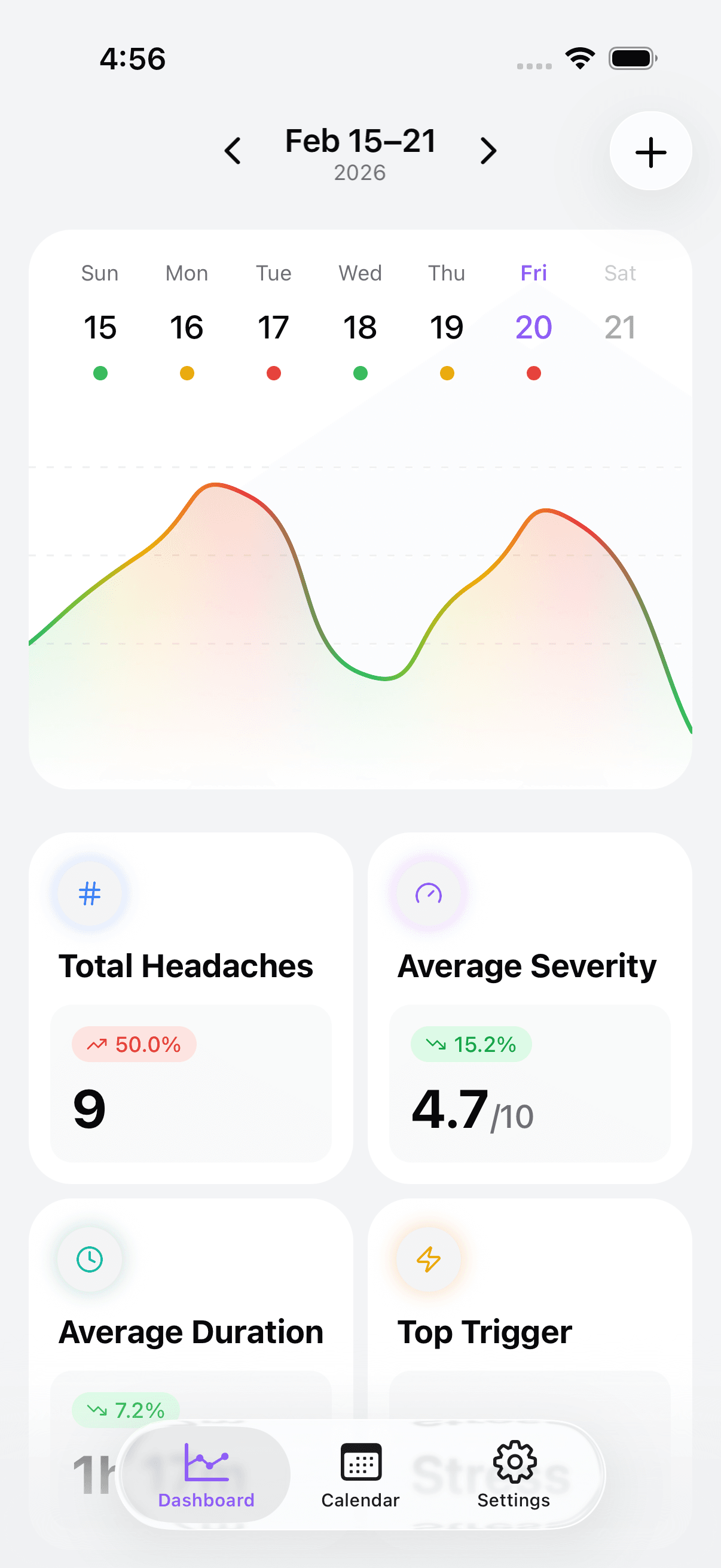
A better strategy is to build a recovery-balance system: a way to notice pressure early, protect basic routines, and recover faster after high-load days. This article gives you a practical 30-day framework you can track in Headache Tracker, with weekly adjustments based on your own data.
Important note: this is educational guidance, not a diagnosis or treatment plan. If headaches are severe, sudden, worsening, or unusual for you, seek medical care promptly.
Why stress-related headaches feel unpredictable
Most people think in single triggers (“it was stress”), but headaches usually come from trigger clusters.
A common pattern looks like this:
- 2-3 nights of short sleep
- more caffeine than usual in the morning
- less water during focused work
- long static posture in front of a screen
- missed lunch, then late heavy dinner
- emotional load from deadlines or conflict
Any one of those might be tolerated. Together, your threshold drops.
That is why the same stressful meeting causes no headache one week and a rough evening headache the next. The meeting wasn’t identical in context.
Think in thresholds, not blame
A useful mental model:
- You have a daily load bucket.
- Stress, poor sleep, dehydration, skipped meals, and tension each add water.
- Recovery habits (rest breaks, hydration, movement, regular food, wind-down routine) drain water.
- Headaches become more likely as the bucket approaches overflow.
Your goal is not perfection. It’s preventing repeated overflow days.
What to track (and what to ignore)
Tracking can help or overwhelm. Keep it lean.
Track these daily:
- Headache intensity (0-10)
- Duration (rough estimate is fine)
- Stress load (0-10, your own perception)
- Sleep hours (and optionally sleep quality)
- Hydration consistency (met/not met)
- Meal regularity (met/not met)
- Caffeine timing/amount
- Screen block length without breaks
- Medication use (if any)
Don’t track 25 variables unless your clinician asked you to. Too much friction kills consistency.
Your 30-day stress-recovery framework
Use this in four weekly phases. The point is progression, not intensity.
Week 1: Baseline and friction removal
Goal: capture reality and make logging easy.
Step 1: Set a two-minute evening log
Pick a fixed time (for example, after dinner). Log quickly. If you miss details, estimate and move on.
Consistency beats perfect precision.
Step 2: Identify your top three pressure points
After 5-7 days, review entries and mark recurring contributors:
- short sleep before headache days?
- long screen blocks?
- delayed meals?
- high stress plus high caffeine?
Choose only three variables to actively improve in Week 2.
Step 3: Build “minimum viable protection”
Create tiny default actions you can do even on busy days:
- drink water at wake + lunch + mid-afternoon
- eat something within a planned time window
- stand and move for 2-3 minutes every 60-90 minutes
- keep one short wind-down ritual before sleep
These are not optimization hacks. They are threshold protection.
Week 2: Stabilize rhythms during busy days
Goal: reduce variability, especially when stressed.
1) Sleep timing anchor
You may not control exact sleep duration nightly, but you can reduce chaos.
- keep wake time relatively stable across weekdays
- avoid large bedtime drift when possible
- use a short pre-sleep routine (dim light, no heavy work, slower pace)
You’re trying to reduce repeated sleep debt cycles, which often amplify headache sensitivity.
2) Caffeine guardrails
Caffeine isn’t automatically bad, but unstable use can be.
- keep dose and timing consistent day to day
- avoid late-day catch-up caffeine when sleep is already at risk
- if reducing intake, taper gradually to avoid rebound headaches
Track caffeine in simple terms (cups, approximate mg, and latest time).
3) Meal timing reliability
Large gaps without food can worsen headache risk for some people.
- set a realistic meal window for breakfast/lunch/dinner
- use backup snacks on deadline days
- avoid accidentally running on coffee only
4) Micro-break structure for screen and posture load
Long static posture and neck/shoulder tension can compound stress headaches.
Try this pattern:
- every 60-90 minutes: 2-5 minute break
- during break: stand, shoulder rolls, neck mobility, eye rest
- once or twice daily: short walk if possible
Short breaks done consistently outperform occasional long “recovery marathons.”
Week 3: Add nervous-system recovery tools
Goal: shorten recovery time after high-stress exposure.
You don’t need a perfect meditation routine. Use practical downshift options.
Option A: 3-minute breathing reset (1-3x/day)
Example:
- inhale gently through nose
- slightly longer exhale
- keep shoulders soft
- repeat for 3 minutes
Longer exhales can help reduce physiological arousal for many people.
Option B: Transition ritual after work
Many headaches show up after prolonged tension release (“let-down period”).
Try a 10-15 minute transition:
- step away from screens
- light movement or brief walk
- water + simple snack
- no intense multitasking for a few minutes
This helps prevent abrupt crash patterns at day’s end.
Option C: Tension scan before bed
Take 2 minutes to notice jaw, neck, shoulders, and forehead tension. Unclench and lower effort.
Week 4: Personalize using your own pattern data
Goal: convert logs into clear rules.
Review 3-4 weeks and ask:
- Which 2-3 factors appear most often before moderate/severe headache days?
- Which protective habits appear on lower-intensity days?
- Are weekends different from weekdays?
- Do headaches cluster after specific schedule changes?
Then write if-then rules you can actually follow.
Examples:
- If I sleep under 6.5 hours, then I cap caffeine early and add one extra hydration check.
- If meetings run back-to-back, then I schedule two 3-minute movement breaks.
- If stress hits 8/10, then I do a breathing reset before continuing focused work.
Good rules are specific, short, and realistic.
How to use medication logs responsibly
If you use acute headache medication, logging timing and frequency matters. This can help you and your clinician evaluate patterns and avoid overuse risk.
Practical tips:
- log what you took and when
- note intensity before and after
- avoid guessing outcomes from one day; look for trends
- discuss frequent-use patterns with a healthcare professional
Don’t self-adjust treatment plans based only on one week of app data.
Red flags: when to seek medical care urgently
Tracking is useful, but some symptoms need prompt professional evaluation.
Seek urgent care/emergency evaluation for symptoms such as:
- sudden severe “worst headache” onset
- new neurological symptoms (weakness, vision loss, confusion, speech trouble)
- headache with fever, stiff neck, or fainting
- new headache after head injury
- clearly worsening pattern or major change from your baseline
If in doubt, err on the side of medical assessment.
Common mistakes that make stress-related headaches worse
Mistake 1: Trying to overhaul everything at once
All-or-nothing plans collapse during real workload spikes. Use small defaults first.
Mistake 2: Treating weekends as a total schedule reset
Large sleep/caffeine/meal swings from weekday to weekend can trigger Monday headaches.
Mistake 3: Ignoring early warning signs
For many people, neck tightness, eye strain, or focus drop appear before pain escalates. Track and act early.
Mistake 4: Chasing perfect trigger certainty
You rarely get one clean cause. Aim for risk reduction, not perfect certainty.
A simple daily template (copy this)
Morning (1 minute):
- planned wake/wind-down window
- hydration cue set
- meal timing check
Midday (1 minute):
- stress rating (0-10)
- last break timestamp
- water + food check
Evening (2 minutes):
- headache intensity/duration
- possible contributors (top 1-3)
- what helped recovery
That’s enough data to improve decisions without turning life into admin.
What progress really looks like
Progress is often uneven. Look for these signs over 30 days:
- fewer high-intensity headache days
- shorter headache duration on stressful weeks
- faster recovery after trigger-heavy days
- better confidence in what to do early
Even partial gains matter.
Build your personal “high-stress protocol” now
Don’t wait for the next deadline crisis. Pre-write your response plan.
Example high-stress protocol:
- protect wake time as much as possible
- hold caffeine within usual range and earlier cutoff
- enforce two micro-breaks minimum
- keep meals on schedule with backup snack
- run one 3-minute breathing reset before late work block
- do a brief transition routine before bed
Store this in your notes so you can follow it when decision fatigue is high.
Final takeaway
For stress-linked headaches, intensity is less effective than consistency. You don’t need heroic routines. You need repeatable, low-friction protection habits plus simple tracking that reveals your pattern.
Use 30 days to gather your own evidence. Then keep what works and drop what doesn’t.
No miracle claims. Just a system that helps you reduce avoidable overload, recover more steadily, and make clearer choices with your clinician when needed.
Take control of your headaches. Start tracking today.