Emma Reed
March 20, 2026

Travel and Headaches: A Practical Routine to Stay Stable When Your Schedule Is Chaos
Travel is fun in photos and mildly feral in real life. Airports, late meals, poor sleep, dehydration, extra caffeine, missed workouts, bright lights, long screen time, and stress can stack fast. If you live with recurring headaches or migraine, that stack can become a trigger cascade before the trip even starts.
The useful truth is this: you do not need a perfect trip to reduce headache risk. You need a repeatable baseline routine that protects your nervous system while plans change around you. Think less “wellness reset,” more “portable stability.”
This guide gives you a six-part routine for pre-trip planning, travel day decisions, and recovery after arrival. It is educational, not medical diagnosis or treatment. If you have severe, sudden, or unusual headache symptoms, seek medical care promptly.
Why travel can increase headache risk
Most people do not have one single trigger. They have several moderate stressors happening together. Travel is excellent at creating exactly that environment.
Common contributors include:
- Sleep timing shifts and reduced sleep quality
- Dehydration from flights, dry air, and inconsistent drinking
- Irregular meals or long gaps without food
- Caffeine swings (too much, too little, or too late)
- Sensory load: noise, bright lighting, crowd stress
- Neck and shoulder tension from carrying bags and awkward posture
- Extended screen exposure while planning, navigating, and waiting
- Hormonal cycle timing (for people affected by hormonal changes)
- Weather and pressure changes in some individuals
Any one factor may be manageable. Several at once can lower your threshold and make a headache more likely. That is why routine matters more than perfection.
The goal: reduce volatility, not eliminate every trigger
A realistic plan focuses on predictable anchors:
- Hydration rhythm
- Meal timing rhythm
- Caffeine boundaries
- Sleep/wake guardrails
- Movement + posture resets
- Early warning response plan
When these anchors are stable, your day has fewer sharp swings. That usually means fewer headache spikes and easier recovery when symptoms begin.
Build your pre-trip “Headache Buffer” (48–72 hours before departure)
The days before travel often get ignored because logistics take over. Unfortunately, those days are where many trips are won or lost.
1) Protect sleep timing
Aim for your regular bedtime and wake time within about 60 minutes. Even one or two nights of short sleep can make your system more reactive.
If you need to wake earlier for departure day, move bedtime gradually the two nights before, rather than forcing one dramatic shift.
2) Keep caffeine boring
Travel day is not the time for caffeine experiments. Try to stay near your usual amount and timing. Big increases can raise jitter and tension; abrupt drops can trigger withdrawal headache.
If you plan to reduce caffeine overall, do it on non-travel weeks.
3) Pack a symptom support kit
Your kit should match your clinician’s advice and your own history. Typical components:
- Refillable water bottle
- Reliable snacks with protein + carbs
- Eye mask or sunglasses
- Earplugs or noise-canceling option
- Neck support item for transit
- Any clinician-recommended medication in original packaging
- A brief note in your phone: what early symptoms feel like and what helps first
4) Decide your non-negotiables
Pick two or three “must keep” behaviors for travel day. Example:
- Drink water at every major transition point
- Eat every 3–4 hours
- Do a 2-minute shoulder/neck reset each hour seated
Simple non-negotiables reduce decision fatigue when your brain is already overloaded.
Travel day routine: simple rules that survive delays
Hydration: use event-based cues
Do not rely on thirst alone. Use travel events as reminders:
- After security
- At boarding
- Mid-flight or mid-ride
- On arrival at destination
Pair water with electrolytes if you sweat heavily, travel in heat, or have long transit windows. Avoid turning this into extremes; overhydration is not helpful either.
Meals: prevent long gaps
Long fasting windows can trigger symptoms in some people. Keep backup snacks available even if meals are planned.
Good options travel well:
- Nuts + dried fruit
- Whole-grain crackers + nut butter packets
- Protein bars with moderate sugar
- Simple sandwiches when available
Aim for consistency over nutrition perfection. A decent snack now is better than a “clean” plan that never happens.
Caffeine: maintain, do not chase fatigue
When sleep is short, it is tempting to add extra coffee all day. That can create a late crash and worse sleep at destination.
A safer approach:
- Keep morning intake close to normal
- Limit late-afternoon caffeine, especially in new time zones
- If very tired, combine a short movement break + hydration before adding another caffeinated drink
Sensory load: lower input proactively
Busy terminals and stations can be sensory ambushes. Use low-friction protections early, not after symptoms escalate:
- Wear sunglasses in bright areas
- Choose quieter waiting zones when possible
- Use short audio breaks without constant notifications
- Reduce screen brightness and contrast when reading itineraries
Posture and muscle tension: micro-breaks beat heroic workouts
You do not need a gym session between gates. You need tiny, repeatable movement doses.
Try a 2-minute sequence every 60–90 minutes:
- Shoulder rolls x 10 each direction
- Chin tucks x 8 slow reps
- Gentle upper-trap stretch, 20 seconds each side
- Stand and walk briefly if safe
This helps reduce neck/shoulder stiffness that can amplify head pain for some people.
Arrival routine: first 12 hours matter most
Many travelers push through arrival, then crash hard. A short stabilization block can reduce next-day flare risk.
Step 1: Rehydrate and eat something balanced
Within the first 60–90 minutes after arrival, drink water and eat a practical meal or snack with protein, carbohydrates, and some fat. This supports energy steadiness and can lower rebound risk.
Step 2: Light exposure and movement
If it is daytime local time, get brief outdoor light and a short walk. This helps reset circadian cues and reduce stiffness.
If arrival is at night, keep lights lower and move toward sleep routine.
Step 3: Protect first destination sleep
Your first night does not need to be perfect. It should be protected.
- Keep room cool, dark, and quiet when possible
- Avoid heavy late meals or high caffeine near bedtime
- Use your familiar wind-down routine (reading, stretching, breathing)
Step 4: Avoid overbooking day one
Build margin into your first day. A packed schedule plus sleep debt is a common setup for headache escalation.
Early warning system: act in the “yellow zone”
Waiting for severe pain often means slower recovery. Track your earliest warning signs and respond quickly.
Common yellow-zone signs may include:
- Neck tightness
- Eye strain
- Irritability or cognitive fog
- Light/sound sensitivity
- Yawning, fatigue, or food cravings
Your response plan can be short:
- Water + small snack
- Five minutes away from bright/noisy stimulus
- Brief neck/shoulder reset
- Follow clinician-advised acute treatment plan when appropriate
The point is not panic. The point is early interruption.
A 7-day travel headache log template
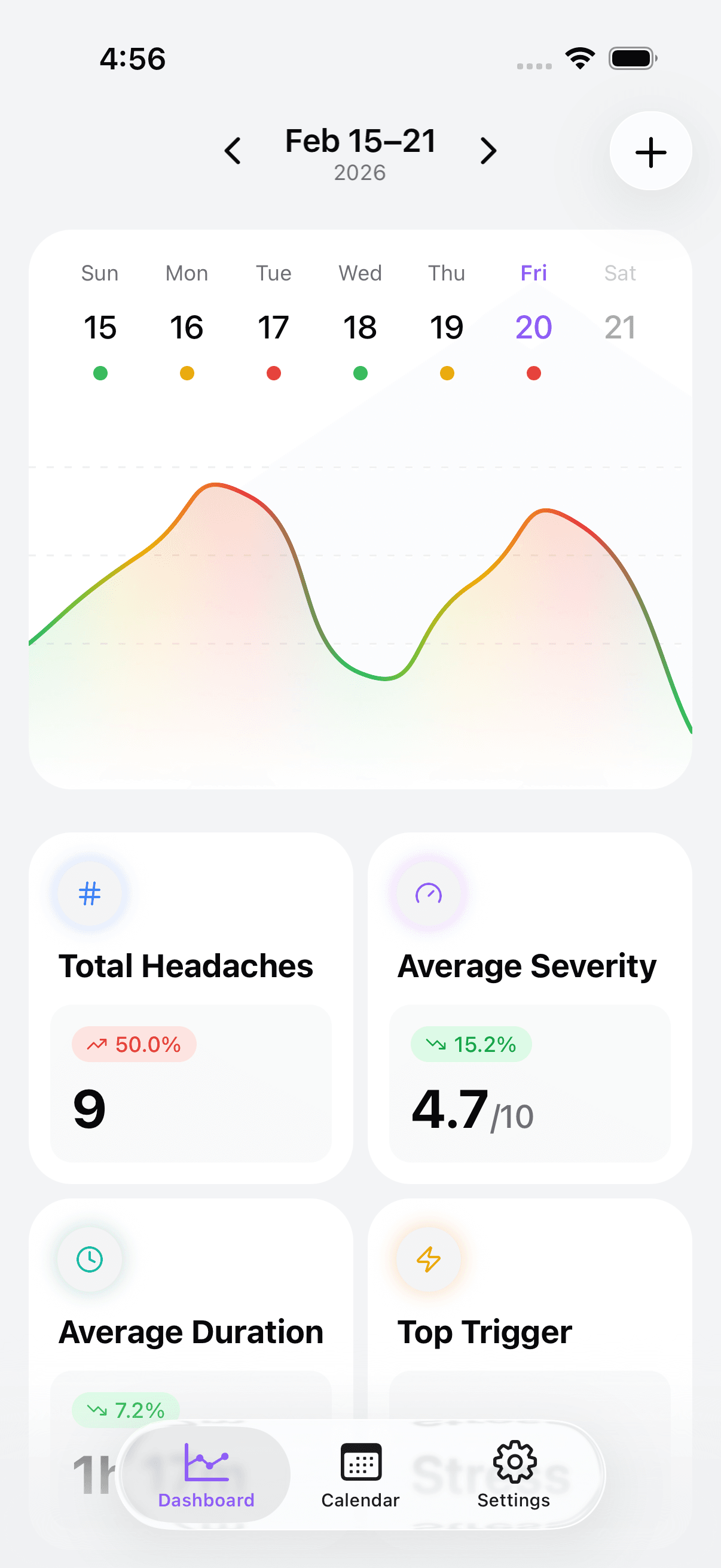
Use your headache tracker to capture patterns without obsessing. Keep entries fast.
Track daily:
- Sleep start/end and quality (1–5)
- Hydration consistency (low/medium/high)
- Meal timing regularity
- Caffeine amount + latest time
- Stress load (1–5)
- Screen exposure blocks
- Headache severity (0–10), duration, and timing
- Possible triggers and what helped
After a week, review for clusters. You may find your “top three” contributors are not what you expected.
Time-zone strategy without overengineering
For short trips (1–3 days), many people do best by staying close to home routine as much as possible.
For longer trips, transition toward local time quickly but gently:
- Shift meals and sleep toward destination schedule
- Use morning light exposure at destination
- Keep caffeine earlier in the local day
- Avoid long daytime naps that delay nighttime sleep
If you have a migraine diagnosis or complex medication plan, discuss travel-specific timing with your clinician before major trips.
What to discuss with your clinician before frequent travel
If you travel often and headaches are disrupting work or quality of life, a pre-travel consultation can help. Useful topics include:
- Your most consistent trigger patterns from tracking data
- Acute treatment timing and limits
- Preventive options if attacks are frequent
- Red-flag symptoms that require urgent care
- Medication-overuse risk and safe boundaries
Bring real logs, not guesses. Clinicians can make better decisions with concrete patterns.
Red flags: when to seek urgent care
Do not self-manage alone if headache is accompanied by warning signs such as:
- Sudden severe “worst headache of life” onset
- New neurological symptoms (weakness, confusion, trouble speaking, vision loss)
- Fever, stiff neck, or persistent vomiting
- Headache after significant head injury
- A clearly different pattern from your typical episodes
When in doubt, get evaluated promptly.
The “minimum viable routine” for chaotic days
Some travel days collapse into pure logistics. When that happens, keep a stripped-down plan:
- Drink water at each transition
- Eat every 3–4 hours
- Keep caffeine near baseline
- Do one 2-minute movement reset per hour seated
- Start yellow-zone response at first warning sign
That is enough to reduce volatility in many real-world scenarios.
Sample one-day checklist
Morning:
- Wake and hydrate
- Normal breakfast timing
- Usual caffeine amount
- Pack water + snacks in accessible pocket
Transit block:
- Water after each checkpoint
- Screen brightness reduced
- Posture reset every 60–90 minutes
- Snack before hunger becomes urgent
Arrival:
- Water + balanced meal
- 10–20 minute walk/light exposure if daytime
- Avoid overscheduling first evening
- Protect sleep window
Final thought
Headache prevention during travel is not about controlling every variable. It is about building a portable routine that lowers total stress load. When your anchors stay steady, surprises cost less.
Track what actually happens, adjust weekly, and keep the system simple enough that you can follow it when things get messy. Consistency beats intensity, especially on the road.
Take control of your headaches. Start tracking today.