Emma Reed
April 7, 2026

Headache Caps: What They Help, What They Don’t, and How to Use Them Safely
Headache caps are everywhere right now: in social feeds, online shops, and “migraine relief kit” lists. If you’ve seen someone pull a stretchy gel cap from the freezer and call it a lifesaver, you’re not alone. The appeal is obvious — no pills, no complicated setup, and fast sensory relief when your head feels overloaded.
But simple does not mean one-size-fits-all.
A headache cap can be genuinely useful for some people in some situations. It can also disappoint, irritate symptoms, or create false confidence if used as the only strategy. This guide breaks down what headache caps may help, what they do not fix, and how to use them safely as part of a broader headache-management plan.
No cure claims. No miracle promises. Just practical, medically cautious guidance.
What is a headache cap?
A headache cap is usually a soft, stretchable wearable wrap that covers part of the forehead, temples, scalp, and sometimes eyes. Most models contain gel or flexible cooling material designed for freezer use. Some versions can also be warmed.
Common product styles include:
- Full pull-down cap (covers forehead, temples, and eyes)
- Headband-style wrap (forehead and temples)
- Zoned caps with extra compression around temples
- Reusable gel wraps with adjustable straps
The two main effects are:
- Cold or gentle heat exposure
- Mild compression
Those can reduce symptom intensity for some headache types, especially when used early.
What headache caps may help with
Headache caps are symptom-management tools, not root-cause treatment. That matters.
People may find benefit for:
- Migraine attacks with sensitivity to light and sensory overload
- Tension-type headaches with scalp/temple tightness
- Post-workday headaches linked to stress and neck tension
- Recovery periods where quiet, darkness, and cooling help nervous system downshift
Potential short-term benefits include:
- Reduced perceived pain intensity
- Decreased light discomfort when eyes are covered
- A calming sensory “reset” in the first 10-20 minutes
- Better ability to rest during symptom spikes
Some users describe caps as “buying time” until their other tools kick in (hydration, prescribed acute medication, food, rest, or reduced stimulation).
That framing is realistic and useful.
What headache caps do not do
Let’s save you frustration: caps have limits.
A cap does not:
- Cure migraine disorder
- Prevent all future headaches
- Replace diagnosis when symptoms are new or changing
- Fix sleep debt, dehydration, skipped meals, medication overuse, or unmanaged stress by itself
- Treat urgent neurological problems
If a cap helps, great — keep it in your toolkit. But if you rely on it while ignoring trigger patterns and medical follow-up, your long-term outcomes may stall.
Cold vs heat: which should you use?
Most headache caps are marketed for cooling, and cold often gets the spotlight. But heat can help certain people, especially when muscle tension dominates.
Cold may be better when:
- You have throbbing migraine pain
- You feel hot/flushed during attacks
- Light and sensory input feel unbearable
- You want numbing relief and reduced stimulation
Heat may be better when:
- Neck/shoulder tightness is a major feature
- You feel stiff rather than throbbing
- Cold worsens discomfort or triggers sensitivity
Mixed strategy:
Some people use cold on forehead/temples and gentle heat on neck separately. You can test this safely over several episodes and log results.
Compression: helpful or too much?
Mild compression can feel stabilizing. Too much can feel awful.
A useful rule: the cap should feel supportive, not restrictive.
Stop or loosen if you notice:
- Increased pounding pain
- Nausea worsening
- Dizziness
- Claustrophobic discomfort or panic
- Skin pain or scalp tenderness
People with allodynia (pain from normal touch during migraine) may tolerate little or no compression during certain phases.
How to use a headache cap safely
1) Start with short sessions
Use 10-15 minutes first. Reassess symptoms, then repeat if helpful. Long continuous cold exposure is rarely necessary.
2) Protect your skin
Avoid direct extreme-cold contact for prolonged periods. If the cap is very cold, place a thin cloth barrier or briefly warm it in room air before wearing.
3) Check fit and pressure
No “vice grip.” A snug, comfortable fit is enough.
4) Use in a low-stimulation environment
Pair cap use with quieter light/noise conditions for better effect.
5) Combine with your established plan
For many people, the cap works best alongside:
- Early hydration
- A small, tolerable meal/snack if needed
- Clinician-approved acute treatment
- Breathing and posture downshift
- Reduced screen exposure
6) Log your response
Track whether use helped pain, nausea, light sensitivity, and recovery speed. Data beats guessing.
A practical attack-day protocol
When early symptoms start:
- Pause and rate symptoms (0-10).
- Apply cap (cold or heat) for 10-15 minutes.
- Hydrate steadily.
- Use your clinician-guided medication strategy if appropriate.
- Reduce sensory load (screen brightness, noise, glare).
- Reassess after 20-30 minutes.
If improved, continue low-stimulation recovery. If not improved or worsening, escalate according to your care plan.
Choosing a cap: what actually matters
Marketing language is loud. Your checklist should be boring and practical:
- Material comfort: soft, non-irritating fabric
- Cooling/heat retention: enough for brief sessions, not necessarily hours
- Compression adjustability: some stretch, no harsh pressure points
- Coverage: forehead + temples are common targets; eye coverage can help light sensitivity
- Cleanability: easy to wipe/wash
- Odor-free storage: freezer-safe bag/container
You do not need the most expensive option for useful results.
Red flags and safety cautions
Do not “push through” if the cap worsens symptoms. Remove it.
Use extra caution if you have:
- Reduced skin sensation or circulation problems
- Cold-induced pain conditions
- Recent head/face skin injury or irritation
Seek urgent medical care for red-flag headache symptoms, including sudden severe “worst headache,” new weakness, confusion, trouble speaking, vision loss, fainting, fever with stiff neck, or headache after major head trauma.
A cap is never a substitute for emergency evaluation.
Frequent mistakes that reduce benefit
- Waiting until pain is extreme before using the cap
- Overfreezing and applying painfully cold material
- Wearing too tight for too long
- Treating the cap as the only intervention
- Not tracking when it helps vs when it doesn’t
Small technique changes can improve results quickly.
How to test whether it works for you (2-week method)
Use a simple test window over multiple headache events.
For each episode, record:
- Symptom onset time
- Headache type/features (throbbing, pressure, nausea, light sensitivity)
- Cap type (cold/heat/compression level)
- Time to first perceived relief
- Relief quality (none/mild/moderate/strong)
- Total recovery time
- What else you used (hydration, meds, rest, caffeine)
After 2 weeks, review:
- Did early cap use reduce peak pain?
- Did recovery become faster?
- Did certain symptom profiles respond better?
- Did any pattern suggest cap use made things worse?
If benefit is inconsistent, that is still useful information. You may need different timing, temperature, or a different tool altogether.
Integrating headache caps into prevention strategy
Caps are most valuable when integrated, not isolated.
A stronger long-term plan usually includes:
- Regular sleep timing
- Predictable meals/hydration
- Trigger awareness (light, skipped food, stress spikes, hormonal changes, weather shifts)
- Movement and neck/shoulder load management
- Medication-use review with clinician when attacks are frequent
Think of the cap as a symptom brake, not the steering wheel.
Workplace and travel use tips
At work
- Store cap in a sealed freezer bag
- Use briefly during breaks, not during critical meetings when possible
- Pair with reduced screen brightness and posture reset
During travel
- Use hotel mini-fridge/freezer or instant cold packs when needed
- Keep a thin cloth barrier in your bag
- Prioritize hydration and meal timing, which often slip on travel days
FAQ
Can I use a headache cap every day?
Many people can use it frequently if skin remains comfortable and sessions are moderate. If you need daily rescue, review broader management with a clinician.
How long should a session be?
Commonly 10-20 minutes, then reassess. Longer is not automatically better.
Should I sleep with it overnight?
Usually not recommended for very cold compression. Short, intentional sessions are generally safer.
What if cold makes my migraine worse?
Try less intense cooling, shorter sessions, or switch to gentle heat if your symptom pattern suggests tension dominance.
Can it replace medication?
For some mild episodes, maybe. For many people, it is one part of a combined plan.
When to talk to a clinician
Book a non-urgent evaluation if headaches are frequent, changing, or interfering with work/school/life. Ask about diagnosis clarity (migraine vs tension vs mixed), acute-treatment timing, prevention options, and medication-overuse risk.
Bring your tracking notes. Specific patterns help clinicians make better decisions faster.
Bottom line
Headache caps can be useful for short-term symptom relief — especially for cooling, light shielding, and gentle compression during early flare windows. They can reduce discomfort for some attacks, but they are not cures and not universal.
Use them safely, keep expectations realistic, and combine them with the boring fundamentals that actually move long-term outcomes: sleep consistency, hydration, meal timing, trigger tracking, and appropriate medical care.
If a cap helps, keep it. If it doesn’t, that is not failure — it is data. Build your plan around what your body consistently responds to.
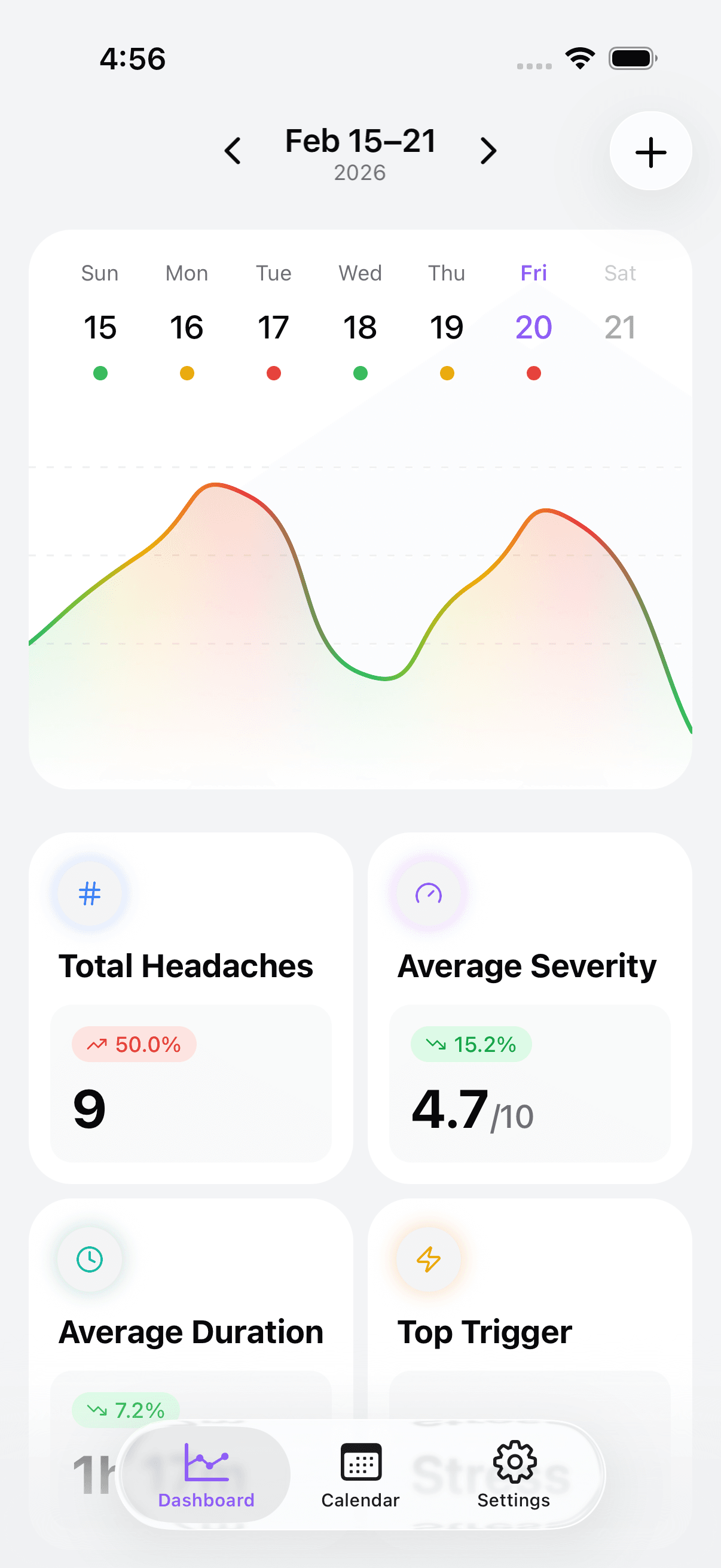
Take control of your headaches. Start tracking today.