Emma Reed
March 23, 2026

Morning Headaches: A Practical 4-Week Reset Plan for More Stable Wake-Ups
Waking up with a headache can ruin a day before it starts. The frustrating part is that morning headaches often feel random: some days are fine, others begin with pressure, tightness, or throbbing before your first glass of water.
In reality, morning headaches are usually not random. They often reflect a pattern that built overnight and during the previous day: sleep timing changes, dehydration, late meals, alcohol, caffeine timing, jaw tension, neck strain, medication habits, and stress load. One factor may not be enough to trigger symptoms, but several stacked together can push you over your threshold.
The good news: you don’t need a perfect lifestyle to improve. You need a repeatable system that makes your mornings less volatile.
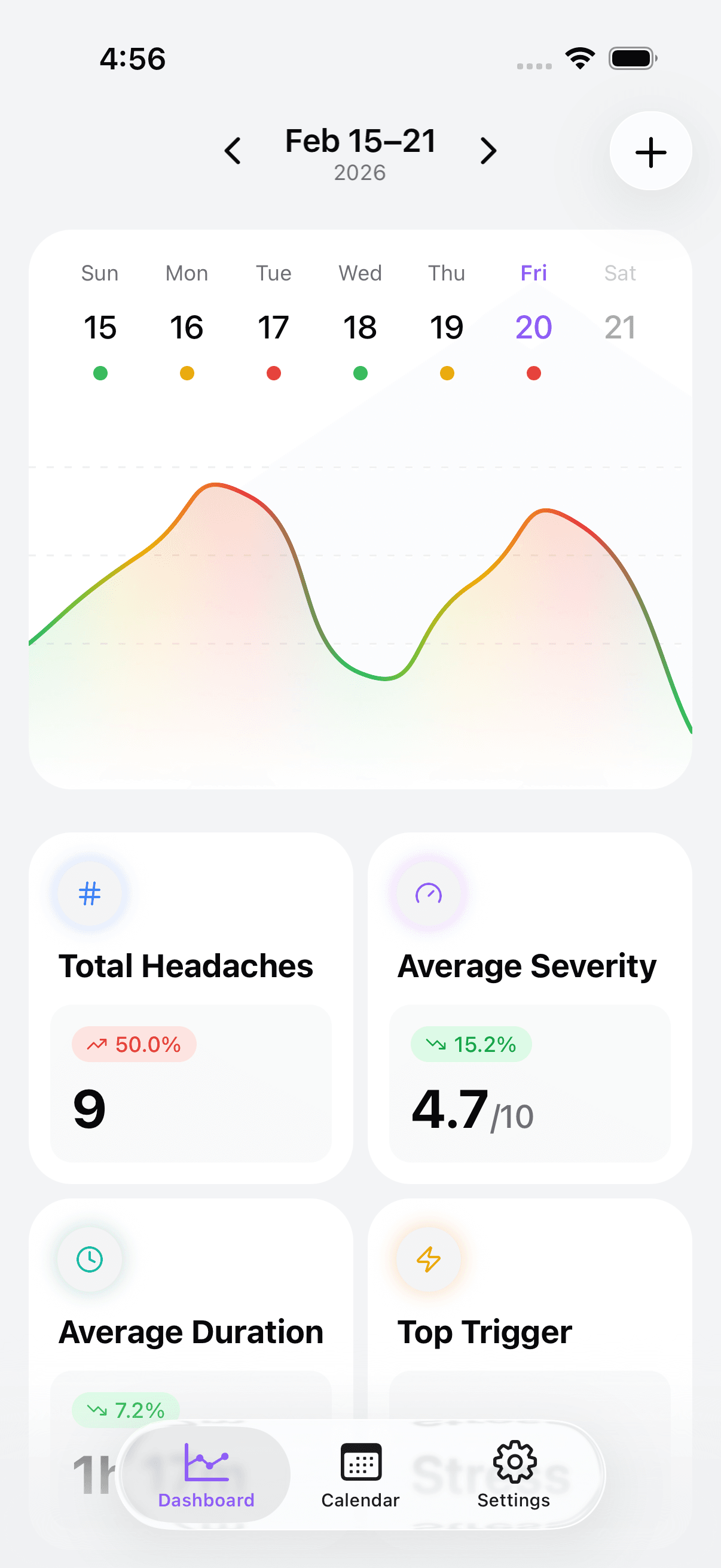
This guide gives you a practical 4-week reset framework you can log in Headache Tracker. It is educational, not a diagnosis or treatment plan. If headaches are sudden, severe, worsening, or unusual for you, seek medical care promptly.
Why morning headaches happen (in plain language)
Think of headaches as a threshold problem, not a willpower problem.
Your system tolerates a certain amount of load. Overnight and early morning can increase that load when several things line up:
- short or disrupted sleep
- bedtime/wake-time drift
- mouth breathing, snoring, or poor sleep quality
- dehydration after a long night without fluids
- late heavy meals or alcohol close to bedtime
- caffeine swings (too late, too much, or abrupt reduction)
- jaw clenching or neck/shoulder tension
- prolonged screen and posture strain the prior day
- stress carryover from the previous evening
Any one of these might be manageable. Combined, morning symptoms become more likely.
So the goal is not to “fix everything at once.” The goal is to reduce stacked volatility and build a stable baseline.
A simple model that actually helps
Use this daily mental model:
- Load adds up: poor sleep, stress, skipped meals, late caffeine, posture strain.
- Recovery drains load: hydration, regular meals, movement breaks, wind-down routine, consistent sleep timing.
- Headache risk rises near overflow.
You are not trying to eliminate every trigger forever. You are trying to avoid repeated overflow mornings.
What to track (without turning your life into a spreadsheet)
Track only what influences decisions. In Headache Tracker, keep your daily log short:
- Morning headache intensity (0-10)
- Duration (rough estimate is enough)
- Sleep window (bedtime, wake time)
- Sleep quality (simple rating)
- Hydration consistency yesterday + on waking
- Last caffeine time + amount
- Dinner timing and alcohol (if any)
- Stress load (0-10)
- Neck/jaw tension (low/medium/high)
- Medication use (if any)
That’s enough to find patterns. More fields are not always better.
The 4-week morning reset plan
This plan is intentionally boring. Boring is good. Boring is repeatable.
Week 1: Baseline and friction removal
Goal: Capture your real pattern and remove obvious obstacles.
Step 1: Make logging easy
Choose a fixed check-in time, ideally evening + quick morning symptom entry. Two minutes total is plenty.
If you miss details, estimate. Perfect memory is not required.
Step 2: Identify your top three contributors
After 5-7 days, review your entries and mark repeat signals before rough mornings:
- bedtime drift > 90 minutes?
- caffeine late in the day?
- low hydration?
- high neck/jaw tension?
- high stress evenings?
Pick three to target. Not seven. Three.
Step 3: Build minimum viable protection
Create tiny defaults that still happen on busy days:
- water after waking and with lunch
- consistent first meal window
- 2-3 minute movement break every 60-90 minutes
- short wind-down before sleep
These are not optimization tricks. They are threshold guards.
Week 2: Stabilize nights so mornings are less chaotic
Goal: Reduce overnight volatility.
1) Sleep timing anchor
You may not control exact sleep duration every night, but you can reduce timing chaos.
- keep wake time relatively stable
- avoid large bedtime jumps when possible
- protect a short pre-sleep routine (dim light, low stimulation)
Even partial consistency helps.
2) Evening load management
Late nights often include the exact combination that worsens mornings: heavy food, alcohol, screens, stress rumination.
Try a practical cutoff structure:
- last heavy meal earlier when possible
- limit alcohol frequency and quantity
- reduce intense screen/work stimulation near bedtime
- do one decompression action (stretch, shower, light reading, breathing)
You are not pursuing perfection. You are reducing stacked risk.
3) Caffeine timing guardrails
Caffeine can help function, but erratic use can destabilize sleep and morning symptoms.
- keep daily amount and timing relatively steady
- avoid late catch-up caffeine when sleep is already fragile
- if lowering intake, taper gradually rather than abrupt drops
Abrupt changes can create rebound discomfort in some people.
Week 3: Reduce morning physiologic stress
Goal: Make wake-up transition gentler.
1) Gentle hydration sequence
After a long overnight fast, hydration can matter.
Try a simple sequence:
- drink water soon after waking
- have breakfast or light fuel in a predictable window
- continue regular fluids through midday
No need for extreme protocols. Consistency beats intensity.
2) Neck and jaw unload routine (5-7 minutes)
For many people, morning headaches overlap with tension.
Basic sequence:
- shoulder rolls and neck mobility (pain-free range)
- gentle upper back opening
- jaw awareness (unclench tongue/jaw position)
- short nasal breathing set to downshift tension
If movement provokes pain, scale down and discuss with a clinician.
3) Light and movement cue
Morning light exposure and low-intensity movement can help signal alertness and rhythm stability.
- get outdoor light when feasible
- add a brief walk or mobility circuit
- avoid jumping immediately into high-stress cognitive load
A smoother first hour can reduce symptom escalation.
Week 4: Personalize and lock your playbook
Goal: Convert observations into your long-term routine.
By now, you should see which variables predict rough mornings most often for you. Build your personal rule set.
Example rules:
- if bedtime drifts late, prioritize hydration + gentle morning movement
- if stress is high, protect wind-down and screen cutoff
- if caffeine ran late, avoid repeating the pattern the next day
- if neck tension rises, add extra movement breaks and evening mobility
Create a one-page “flare prevention checklist” and a one-page “flare day fallback plan.”
Flare day fallback plan (when you wake with pain anyway)
Even with good habits, flare days happen. The point is damage control, not self-blame.
Use a calm sequence:
- Hydrate
- Light food if tolerated
- Reduce sensory overload (noise/light as needed)
- Gentle movement or mobility
- Review likely contributors from previous day
- Follow your clinician’s guidance for medication use
- Log what happened while details are fresh
Then return to baseline routine the next day. Don’t overcorrect with extreme changes.
Pattern examples you might discover
Pattern A: “Late work + late caffeine + short sleep”
Common result: headache on waking, poor focus, repeated afternoon caffeine.
Countermeasure: earlier caffeine cutoff, shorter evening work tail, protected wake time.
Pattern B: “Stress evening + jaw tension + poor recovery”
Common result: tension-heavy morning headache.
Countermeasure: decompression ritual, jaw/neck unload routine, movement breaks next day.
Pattern C: “Weekend drift + irregular meals”
Common result: Monday morning flare.
Countermeasure: smaller weekend timing shifts and predictable morning fuel.
Patterns matter more than isolated bad days.
Medication and safety notes
This article is not medical advice. If you use headache medication, follow your clinician’s instructions.
Important safety reminders:
- Avoid frequent unsupervised overuse of acute pain medication.
- If headaches become more frequent or medication use rises, discuss with a clinician.
- Seek urgent care for severe sudden headache, neurologic symptoms, fever with neck stiffness, head injury, or other red-flag symptoms.
If morning headaches are persistent, a clinician can evaluate contributing factors such as sleep quality, tension patterns, sinus issues, blood pressure, migraine patterns, and other relevant causes.
How to use Headache Tracker effectively during this reset
A tracking app is useful only if it drives action. Keep your process practical:
- Use quick templates so logging is low effort.
- Review trends weekly, not hourly.
- Focus on repeat contributors, not one-off anomalies.
- Build if/then rules from your own data.
- Judge progress over 2-4 weeks, not single days.
A good sign of progress is not “zero headaches forever.” A better sign is:
- lower average morning intensity
- fewer multi-day flare streaks
- faster recovery after high-stress days
- less unpredictability in wake-up symptoms
A realistic daily template
Use this as a starting point and adjust to your life.
Evening (10-20 min total):
- finish heavy eating earlier when possible
- reduce high-intensity screen/work load before bed
- short decompression ritual
- prepare water and simple morning plan
Morning (10-20 min total):
- hydrate
- light exposure
- gentle neck/shoulder/jaw unload
- regular caffeine and food timing
Daytime maintenance:
- movement breaks every 60-90 minutes
- regular fluids and meals
- note stress spikes and respond early
This is sustainable for busy schedules, which is the entire point.
Common mistakes (easy to avoid)
-
Changing everything overnight Big resets often collapse. Start with stable basics.
-
Tracking too much If logging takes ten minutes, adherence drops.
-
Chasing daily perfection Morning headaches are influenced by cumulative load. Think in weekly trends.
-
Ignoring recovery after stressful days High-load days need intentional decompression and protection.
-
Self-blame during flare days Flares are data, not failure.
Final takeaway
Morning headaches usually improve through consistent routine design, not heroic effort. Build a system that protects sleep timing, hydration, meal regularity, caffeine consistency, and tension recovery—then adjust using your own data.
If you track briefly, review weekly, and apply simple if/then rules, your mornings can become more predictable and less punishing.
Not magic. Just good operations.
Take control of your headaches. Start tracking today.