Emma Reed
February 26, 2026

Why You Wake Up With a Headache: 12 Common Patterns and How a Migraine Diary Helps
Waking up with a headache can feel unfair before the day even starts. You might sleep a full night and still open your eyes with pressure in your temples, neck tension, or a familiar migraine build-up. It can seem random. Usually, it is not random.
Morning headaches often come from repeated patterns: sleep timing changes, dehydration, stress carryover, snoring-related breathing issues, medication timing, caffeine swings, and more. Most people cannot spot these patterns from memory alone, because memory overweights the worst days and forgets the ordinary days that matter most for trend detection.
That is where a migraine diary becomes practical. A structured diary does not diagnose disease, but it helps you and your clinician identify what is likely contributing, what is less likely, and what to test next in a safe, methodical way.
Medical safety note: This article is educational and not a diagnosis or treatment plan. If headaches are sudden, severe, worsening, new after age 50, associated with neurological symptoms, fever, confusion, head injury, or persistent vomiting, seek urgent medical care.
Why morning headaches are tricky to decode
Morning symptoms are the result of what happened overnight, but the trigger chain often starts the day before. A late salty meal, short sleep, jaw clenching, alcohol, poor hydration, heavy stress, and medication timing can all stack together. By sunrise, you feel only the result.
Because multiple variables overlap, one bad morning rarely reveals the cause. The useful approach is pattern tracking over 2 to 6 weeks.
The minimum diary data that actually helps
You do not need a perfect log. You need a consistent one. Track these fields daily:
- Headache severity on waking (0-10)
- Start time and end time
- Headache features (throbbing, pressure, one-sided, neck-related)
- Associated symptoms (nausea, light sensitivity, sound sensitivity, aura)
- Bedtime and wake time
- Sleep quality (good/fair/poor)
- Snoring or overnight awakenings if known
- Hydration level the prior evening and morning
- Caffeine intake amount and timing
- Alcohol intake and timing
- Dinner timing and whether meals were skipped
- Medications used, dose, and response
- Stress level the prior day
With this baseline, morning headaches become measurable instead of mysterious.
12 common morning headache patterns
1) Sleep schedule swing (weekday vs weekend)
If bedtime and wake time shift by 1-3 hours across the week, your nervous system may react with a “social jet lag” pattern. Some people feel this as a dull bilateral pressure; others experience migraine activation.
What to test: Keep wake time stable within about 30-60 minutes, including weekends, for 2 weeks. Use the diary to compare wake pain scores before and after.
2) Too little sleep or fragmented sleep
Short sleep is a well-known headache amplifier. Repeated awakenings can be just as disruptive as short duration. You may think you slept enough, but poor sleep continuity still increases morning pain risk.
What to test: Record sleep hours and quality separately. Many people find headache risk rises when sleep drops below their personal threshold (for example, under 6.5 or 7 hours).
3) Oversleep rebound
For some people, sleeping significantly longer than usual can also trigger morning pain, especially after a sleep-deprived week. The body likes regularity more than extreme catch-up swings.
What to test: Keep total sleep more consistent across days and monitor whether post-oversleep headache frequency drops.
4) Overnight dehydration
If fluid intake was low in the evening and morning hydration is delayed, mild dehydration can contribute to morning headache burden. This is especially common with dry indoor air, exercise days, or caffeine/alcohol use.
What to test: Track evening hydration and add a simple morning hydration routine. Look for trend changes over 10-14 days.
5) Caffeine withdrawal window
If your first caffeine dose is delayed compared with usual timing, withdrawal headache can appear soon after waking. The pattern is often predictable: morning pain improves after caffeine.
What to test: Log caffeine amount and timing with precision. Try stabilizing intake timing rather than increasing dose.
6) Alcohol the night before
Even modest alcohol can fragment sleep, alter hydration, and increase next-morning headache likelihood in sensitive people.
What to test: Compare headache mornings after alcohol vs alcohol-free evenings. The diary makes this comparison objective.
7) Late, heavy, or high-sodium dinner
Late meals, heavy portions, or high-sodium foods may worsen sleep quality, reflux, or overnight thirst, indirectly increasing morning headache risk.
What to test: Shift dinner earlier and lighter for one week, then compare morning severity averages.
8) Jaw clenching or teeth grinding (bruxism)
Bruxism can produce temple pain, jaw soreness, facial pressure, and neck discomfort on waking. It may coexist with stress and poor sleep.
What to test: Track jaw tenderness and morning temple pain together. Discuss suspected bruxism with a dentist or clinician for proper evaluation.
9) Neck posture strain during sleep
Unsupportive pillow position or sustained neck flexion can lead to cervicogenic-type morning headache. Pain often starts in the neck/base of skull and radiates upward.
What to test: Record pillow changes, sleep position, and neck stiffness ratings. Make one ergonomic adjustment at a time.
10) Snoring and possible sleep-disordered breathing
Frequent snoring, witnessed pauses in breathing, dry mouth on waking, and daytime sleepiness can point toward sleep-disordered breathing, which is associated with morning headaches.
What to do: This is important to discuss with a healthcare professional. Diary data plus symptom notes can strengthen referral quality.
11) Stress carryover and high arousal sleep
A high-stress day can continue into the night as muscle tension, shallow sleep, or repeated awakenings. Morning headache may be the visible endpoint of that stress load.
What to test: Log prior-day stress and whether you did a wind-down routine. Compare mornings after decompression vs no decompression.
12) Medication timing or overuse pattern
Some headaches worsen due to medication timing mismatch, while frequent rescue medication use may lead to rebound patterns in susceptible individuals.
What to do: Track medication name, dose, timing, and effect at 1-2 hours. Bring this data to your clinician rather than self-adjusting aggressively.
How a migraine diary turns patterns into decisions
A diary helps you avoid two common errors: changing too many variables at once and deciding from one dramatic day. Better approach:
- Track consistently for 14 days.
- Identify 1-2 repeated preconditions before morning headaches.
- Run one behavior test for 7 days.
- Re-check trend (frequency, severity, functional impact).
- Keep helpful changes, discard unhelpful ones.
This keeps changes evidence-based and realistic.
Example 14-day action plan
Days 1-4: Baseline only
No major changes. Just log accurately.
Days 5-9: Test one variable
Example: fixed wake time and earlier hydration.
Days 10-14: Reassess
Compare to baseline mornings. Did headache score or frequency improve?
If yes, continue. If no, choose the next variable (for example caffeine timing or dinner timing).
Weekly review template (10 minutes)
At the end of each week, review:
- Number of mornings with headache
- Average morning severity
- Most repeated precondition
- Medication-use frequency
- Days with reduced work/study function
Then choose exactly one next-week adjustment.
When to seek medical review sooner
Use your diary as a signal amplifier, not a substitute for care. Seek medical advice promptly if:
- Headache pattern changes suddenly
- Frequency or intensity escalates
- New neurological symptoms appear (weakness, speech changes, vision loss)
- You wake with severe headache repeatedly plus daytime sleepiness and heavy snoring
- Daily function is declining despite careful self-management
Mistakes that reduce diary usefulness
- Logging only bad days
- Changing multiple lifestyle variables at once
- Inconsistent pain scales
- Skipping medication timing details
- Not reviewing your own data weekly
Consistency beats detail overload.
Practical, medically safe bottom line
You do not need to “fix everything” in one week. You need a clean signal. Morning headaches usually improve when repeated triggers are identified and managed step by step.
A migraine diary helps you do exactly that: move from guessing to pattern-based decisions, reduce avoidable headache mornings, and prepare better conversations with your clinician.
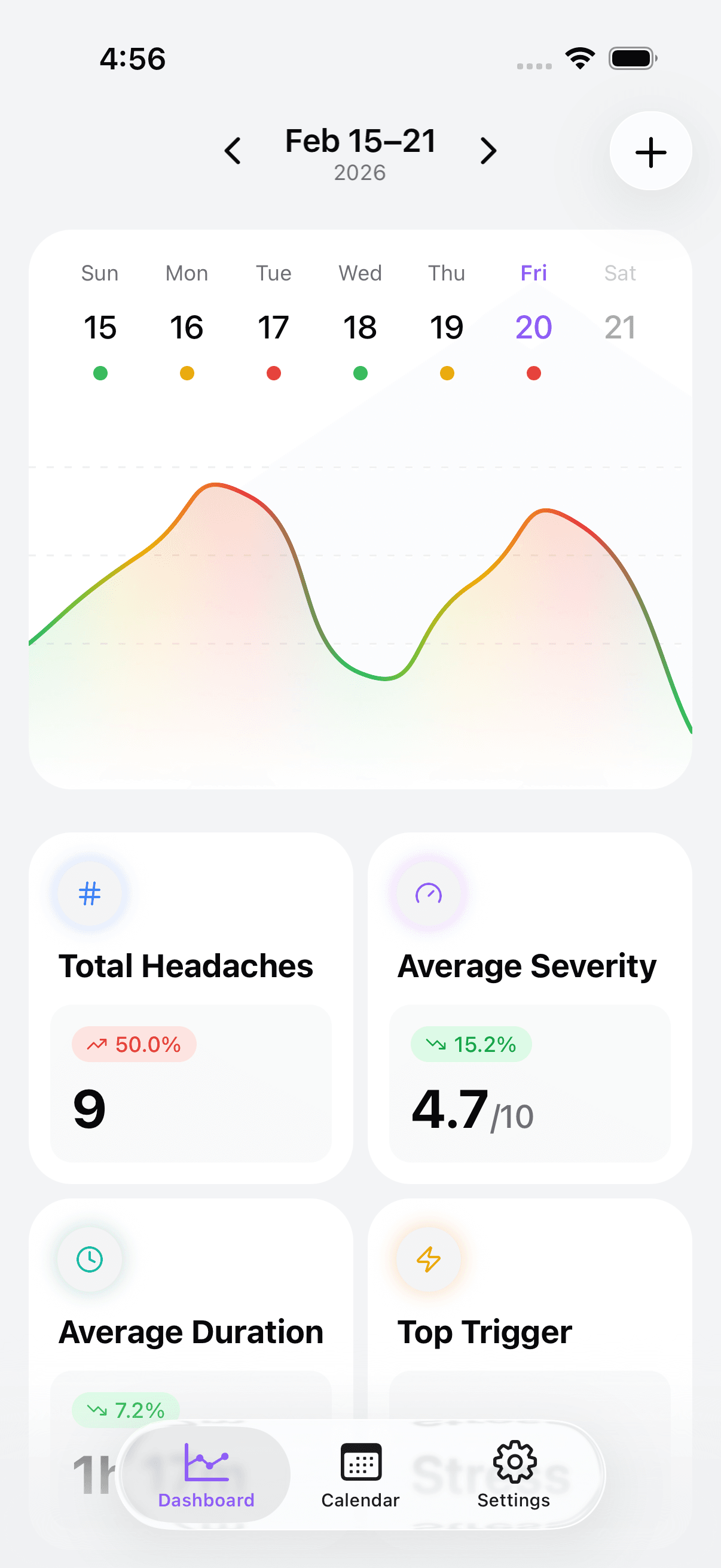
If you use Headache Tracker daily, even for 60-90 seconds, you can build a reliable map of what predicts your worst mornings and what genuinely helps over time.
A simple daily checklist you can copy
To make this easier, keep a short checklist in your app notes:
- Wake headache score (0-10)
- Where is the pain? (temple, one side, forehead, neck)
- Sleep quality last night
- Bedtime and wake time
- Snoring/dry mouth/overnight wakeups
- Last caffeine time and first caffeine time today
- Evening hydration quality
- Dinner timing and size
- Alcohol yes/no
- Rescue medication and response
This takes about one minute on most days and can dramatically improve trend quality by the end of the month.
Small, consistent entries are more useful than rare, perfect entries. Aim for continuity, review your trends weekly, and bring your summary to medical visits when needed.
Take control of your headaches. Start tracking today.