Emma Reed
March 11, 2026

Hydration, Caffeine, Sleep, and Stress: A 30-Day Headache Tracking Plan You Can Actually Stick With
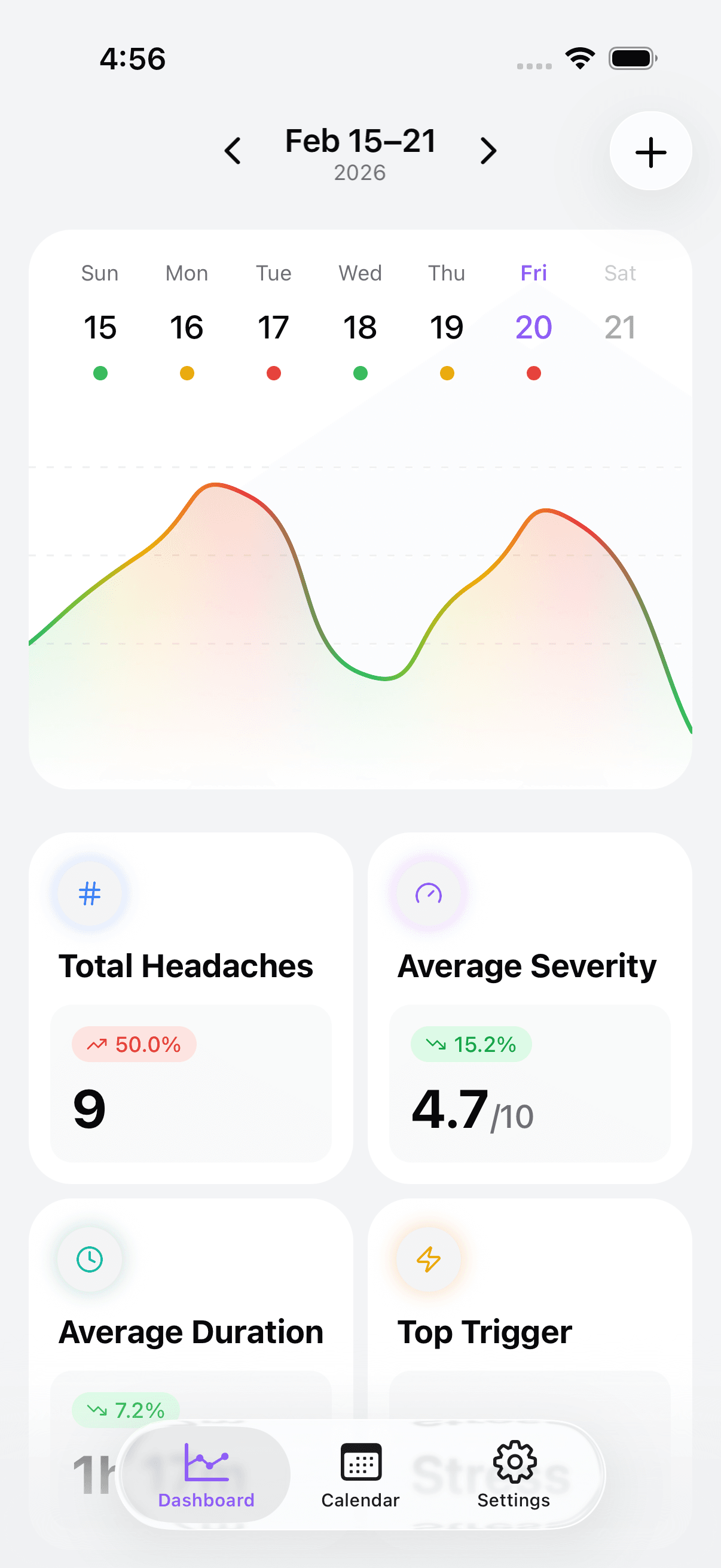
If headaches feel random, tracking can make them feel less random.
Not because one spreadsheet magically fixes pain, and not because every headache has one clean cause. Headaches are often multi-factor and messy. But tracking can help you spot patterns you can act on: the days when hydration dropped, caffeine timing shifted, sleep shortened, stress spiked, or meals got delayed.
This guide gives you a practical 30-day system for tracking headache-related habits without turning your life into a lab. It is informational and not medical diagnosis or treatment advice. If headaches are severe, new, or changing quickly, get medical care.
Why simple tracking works better than perfect tracking
Most people quit tracking for one of three reasons:
- The system is too complicated
- The entries take too long
- They cannot tell what to do with the data
A useful tracker is simple enough to use on busy days and structured enough to produce decisions. The goal is not to capture every molecule of your day. The goal is to answer practical questions like:
- Do late caffeine days line up with next-morning headaches?
- Do headaches happen more often after short sleep?
- Are missed meals and hydration dips common on headache days?
- Does stress intensity matter more than stress duration for you?
If you can answer those questions with moderate confidence, your tracking is already successful.
What to track (and what to ignore)
Track a small set of variables you can realistically log.
Core daily inputs
- Hydration
- Total water/fluid intake (approximate is fine)
- Large gaps between drinks
- Caffeine
- Total amount (coffee, tea, energy drinks, pre-workout)
- Timing of last caffeine intake
- Sleep
- Total duration
- Bedtime and wake time consistency
- Stress load
- Daily stress rating (0–10)
- High-stress events (short notes)
- Meals
- Missed/delayed meals
- Long fasting windows if relevant
Headache event outputs
For each headache event, log:
- Start time
- Peak intensity (0–10)
- Duration
- Location/quality (optional short tags)
- Associated symptoms (optional)
- What you did (rest, hydration, medication, walk, dark room)
- Perceived relief after 1–2 hours
What to skip early on
Skip advanced variables in week one unless your clinician asked for them.
- Weather pressure deltas
- Detailed macro intake
- Minute-by-minute screen exposure
- Ten different supplement variables at once
You can always add layers later. Start with adherence.
The minimum viable daily log (takes 2–3 minutes)
Use this template once per day:
- Hydration: ___ liters (or cups)
- Caffeine total: ___ mg/cups
- Last caffeine time: ___
- Sleep: ___ hours
- Bed/Wake consistency: Yes/No
- Stress score (0–10): ___
- Missed or delayed meal: Yes/No
- Headache today: Yes/No
If headache = Yes, add event details.
That is enough data to generate useful weekly pattern checks.
Building your personal baseline (Days 1–7)
The first week is observation only. Avoid major habit overhauls. You are establishing your baseline pattern.
Baseline checklist
- Log daily, even on headache-free days
- Record caffeine timing honestly (especially late-day use)
- Keep notes short; consistency beats detail
- Mark “uncertain” instead of guessing exact numbers
By the end of week one, calculate:
- Number of headache days
- Average sleep on headache vs non-headache days
- Average stress on headache vs non-headache days
- Frequency of delayed meals before headache events
You are not proving causation here. You are identifying candidate patterns to test.
Week 2: Stabilize one variable, not five
A common mistake is changing everything at once. Then you cannot tell what mattered.
In week two, pick one variable to stabilize:
- Hydration rhythm (for example, drink on a regular schedule)
- Caffeine cutoff time (for example, no caffeine after early afternoon)
- Sleep window consistency
- Meal timing regularity
Keep other habits as close to baseline as practical. If headaches improve, you have a stronger signal.
Example
Suppose your week-one data shows frequent headaches after short sleep and late caffeine. For week two, you test caffeine timing only:
- Same total caffeine amount
- Earlier final caffeine intake
- Continue normal sleep routine without forced changes
If morning headaches decline while other variables are similar, timing may be important.
Week 3: Add a second controlled adjustment
If week two produced a plausible signal, keep that change and add one more.
Example sequence:
- Week 2: Caffeine cutoff stabilized
- Week 3: Add sleep consistency target (same wake time ±30 minutes)
Again, avoid changing everything. Controlled stacking helps you learn what is worth maintaining long-term.
Week 4: Stress-response experiments
Stress is harder to “remove,” but you can track and test your response strategy.
Pick one short intervention to use on high-stress days:
- 10-minute walk break
- 5-minute breathing cycle
- 15-minute screen break in dim lighting
- Brief neck/shoulder mobility routine
Log whether you used it and how headaches behaved on those days. You are testing practicality, not perfection.
How to review your data each week
A weekly review should take 15–20 minutes.
Step 1: Count headache burden
- Headache days this week
- Average intensity
- Average duration
Step 2: Compare high-risk days
Look for recurring combinations within 24 hours before headache onset:
- Sleep below your baseline
- Delayed meals
- Higher stress rating
- Late caffeine timing
- Lower hydration
Step 3: Look for pattern clusters
Often one factor is weak alone but stronger in combinations.
Example cluster:
- Sleep <6.5 hours + stress ≥7 + delayed lunch
If that cluster appears before multiple headache events, it is a practical target for prevention planning.
Step 4: Write one action rule for next week
Keep it specific and behavioral.
- “I will finish caffeine by 1:30 PM on workdays.”
- “I will carry a water bottle and refill at lunch.”
- “If stress hits 8/10, I take a 10-minute walk before the next meeting.”
One rule per week is enough.
Practical examples of track-and-adjust decisions
Example A: Hydration dips on commute-heavy days
Data pattern:
- Lower fluid intake on commute days
- Afternoon headaches more frequent on those days
Action test:
- Pre-fill bottle night before
- Drink fixed amount before leaving home
- Add calendar reminders for mid-morning and mid-afternoon hydration
Example B: Weekend caffeine swing
Data pattern:
- Much higher caffeine Saturday morning
- Sunday morning headaches more common
Action test:
- Keep weekend caffeine closer to weekday range
- Keep first caffeine timing consistent
Example C: Sleep drift + skipped dinner
Data pattern:
- Late bedtime and missed dinner repeatedly precede next-day headaches
Action test:
- Protect a minimum dinner window
- Keep wake time fixed even if bedtime slips
None of these are universal medical truths. They are examples of individualized pattern management.
Common tracking mistakes (and fixes)
Mistake 1: Logging only on bad days
Fix: Log daily. Non-headache days are your comparison group.
Mistake 2: Overprecision that kills adherence
Fix: Use ranges and quick tags. Approximate data beats missing data.
Mistake 3: Changing too many habits at once
Fix: Test one primary change per week.
Mistake 4: Ignoring delayed effects
Fix: Review 24-hour and 48-hour windows before headache onset.
Mistake 5: Confusing association with certainty
Fix: Treat patterns as hypotheses. Keep testing before drawing strong conclusions.
A simple scoring model for your own review
If you like structure, assign daily risk points:
- Sleep below your target: +2
- Last caffeine later than your cutoff: +2
- Stress ≥7/10: +2
- Delayed/missed meal: +1
- Hydration below target: +1
Daily risk score range: 0–8.
After 30 days, compare headache frequency by score band:
- 0–2 points
- 3–5 points
- 6–8 points
If headache probability rises with score, your model is directionally useful. Then refine thresholds based on your data.
When to involve a clinician sooner
Tracking is helpful, but certain signs need prompt medical evaluation.
Seek medical care if you notice:
- Sudden severe “worst headache” pattern
- New neurologic symptoms (for example, weakness, speech changes, confusion)
- Headache after head injury
- Persistent worsening pattern or major change from your usual headaches
- Frequent medication use with concern for rebound patterns
Bring your 30-day log to the appointment. Structured data can improve conversation quality and help clinicians assess patterns more efficiently.
30-day implementation checklist
Use this checklist to stay consistent.
Setup (Day 0)
- Choose your tracking tool (app, notes, spreadsheet)
- Define your sleep target range
- Define caffeine cutoff time
- Set hydration target (realistic)
- Add two daily reminders for logging
Week 1 (Baseline)
- Log every day
- Make no major routine changes
- Identify top 1–2 candidate triggers or clusters
Week 2 (Single-variable test)
- Stabilize one variable only
- Keep daily logs short and complete
- Compare with week-one baseline
Week 3 (Second-variable test)
- Keep week-two change
- Add one more targeted adjustment
- Watch for trend consistency
Week 4 (Stress-response layer)
- Use one short stress intervention on high-stress days
- Log intervention use and headache outcomes
- Draft your long-term “maintenance rules”
End-of-month review
- Count total headache days
- Compare first two weeks vs last two weeks
- Identify top repeatable protective habits
- Decide what you will keep for the next month
Final takeaway
A good headache tracking system is not about perfect data. It is about practical decisions you can repeat.
Over 30 days, simple structured logging can reveal how hydration rhythm, caffeine timing, sleep consistency, meal timing, and stress response interact for you. Even partial clarity is useful if it leads to sustainable changes.
Keep it simple. Keep it honest. Review weekly. Adjust gradually.
That is how tracking becomes actionable instead of exhausting.
Take control of your headaches. Start tracking today.